
 925-215-3543


Musika Quick Stats
25 Years
Since We Started
41,456+
Happy Customers
10,769
Cities with Students
3,123
Teachers in Network
Lesson Special - Up to 20% OFF! Get Started Now with a Risk-Free Trial!
Here are just a few of the many teachers offering Piano lessons in Walnut Creek . Whether you are looking for beginner guitar lessons for your kids, or are an adult wanting to improve your skills, the instructors in our network are ready to help you now!
Instruments: Piano Keyboard
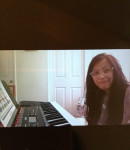
I will organize a manageable number of tasks for duration of each lesson to my students. Then, I will determine the progress of the students by assigning them with appropriate tasks to practice plus music theory. It is more rewarding when seeing my students grow and love what they are learning. My teaching style is to teach them by their character and learning pace. By tailoring what my students' ability to learn music skills, I am more prone to teach what they can achieve in their every lesson. Read More
Instruments: Piano Guitar Violin
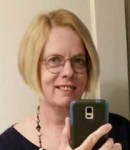
I taught my students how to read music and how to play instruments. By the end of the school year, the students who were from 9-14 years old performed our own concert at California State University, East Bay. On my free time, I have also recorded music covers on my own, and jam with friends. Playing music is a great way to relax, and have fun! My goal is to share this skill and excitement to you! Read More
Instruments: Piano
My teaching style is flexible. For beginners, I will teach them all basic technic and reading skills. I believe in learning music by the ability of reading the music. Therefore, to have good reading skill is essential to all my students. Even if the students do not read music fluently, I will emphasize my teaching in improving them to read music. All my students will have good music sight reading eventually. Read More
Instruments: Piano Organ
I began teaching in high school. Immediately after college, my studio grew to include 25 students. Included in the mix, some students were as young as 8 and several were adult beginners. Intermediate and advanced students also studied with me, as well as adults who were "re-beginners." (The term refers to adults who took lessons in childhood and have picked up their instrument again years later.) During graduate school, my assistantship included teaching piano classes comprised of students majoring in voice or music education. Read More
Instruments: Piano Keyboard
When teaching piano I always start with this question: "Why are you taking piano lessons?". The answer is very important to me because it gives me an idea of how to approach the lessons. There are many different reasons for taking lessons and both student and teacher need to be clear on what purpose the lessons will serve. No matter the level I will always focus on playing in a relaxed and natural manner. Read More
Instruments: Piano Accordion
I have been involved in piano performance since i was five years old. My passion for music has grown over the years in my life. I have studied music at San Jose City College, San Jose State University and with the 59th Army National Band. I have performed in jazz bands, concert bands, latin bands, choir, and solo piano performance. I have had the honor of performing at the palladium in hollywood, ca. with the 59th Army National Guard Band. Read More
Instruments: Piano Violin
I was born in Tashkent, Uzbekistan where I began studying piano at the age of five with Professor Tamara Papovich and began playing violin at age six with Professor Gulnara Suleymanova. I began my undergraduate degree at the State Conservatory of Uzbekistan in 2004 andgraduated in 2008.Imoved to the United States in 2010to pursue my Professional Performance Certificate atLynn University, Florida with Professor Carol Cole. Also, starting from the age of sixteen, I began violin coaching to students from all levels. Read More
Instruments: Guitar Bass Guitar Harmonica Electric Guitar Acoustic Guitar
If you weren't a musician what do you think you'd be doing instead?
If I weren't a musician, I would be back in the advertising agency business.
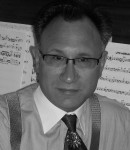
It allow me to write jingles, create videos that combine audio, music and video to make a more dynamic communication piece that is more memorable. Now, I would like to do more Pro bono projects for needy charities. It is important for us all to participate in our community. What better way that through music, especially from my students. I am fortunate to enjoy playing several instruments, some not as well as others, but music is about how you pass along emotion, not just notes,
What is your dream piece to perform and why?
My dream piece to perform would be a concert of self written songs that communicate emotion to the audience, enjoyment of the musicality, harmonies and syncopated sounds that together make a very enjoyable time for the audience. I have to tell you it is really fun to play in front of people. Like anything, it takes a little time and effort to learn anything. If it is fun along the way, you will never stop doing it.
Do you use specific teaching methods or books? (Ex: Alfred, Bastion, Suzuki, Hal Leonard) Why did you choose them if you did?
The Suzuki method of teaching is closest to my style of teaching. Let's play. I'll show how to participate musically, sometimes very simple, but we are playing. And enjoying play. After all, playing is called that for a reason, and that's play. Some people like note playing, others syncopated chording. I like group teaching as it allows the student to learn to play with others, to keep time, to be on time, and a few mistakes don't matter. 'Group play shows that mistakes in a group are barely noticed and not the end of the world.
What does a normal practice session look like for you?
I like to evaluate the persons weekly practice after a fun warm up. Then talk what the student has enjoyed from listening to the radio or other means.
Together we might listen to the song as a candidate for a future song to learn. If the song is in the students ability range, we might find what the student is willing to do to learn a part of the song, however easy.
If you have a Music Degree, what is it in (Performance, Education, Musicology, Theory, Composition, etc) and why did you choose that degree?
I was fortunate to have an early learning in piano, which gave me an excellent basis for music in any form. Whether I was writing an advertising jingle, reading the music from my church hymnal, or playing in a band with friends for fun, or professional for money. Music is more than a hobby. It is part of my life. I was apprehensive about singing at first, now I enjoy singing, and am not afraid to sing out loud, or in front of people. I believe anyone needs a basic understanding of music, but the rest does not have to be hard,
25 Years
Since We Started
41,456+
Happy Customers
10,769
Cities with Students
3,123
Teachers in Network
Trusted as the industry leader, for over 21 years the teachers in our network have been providing Piano lessons in Walnut Creek to students of all ages and abilities.
We'll then reach out to the teachers for you.
Schedule the risk-free trial lesson directly with the teacher.
Continue with that teacher or try someone else.