
 214-865-6379






Musika Quick Stats
25 Years
Since We Started
41,456+
Happy Customers
10,769
Cities with Students
3,123
Teachers in Network
Lesson Special - Up to 20% OFF! Get Started Now with a Risk-Free Trial!
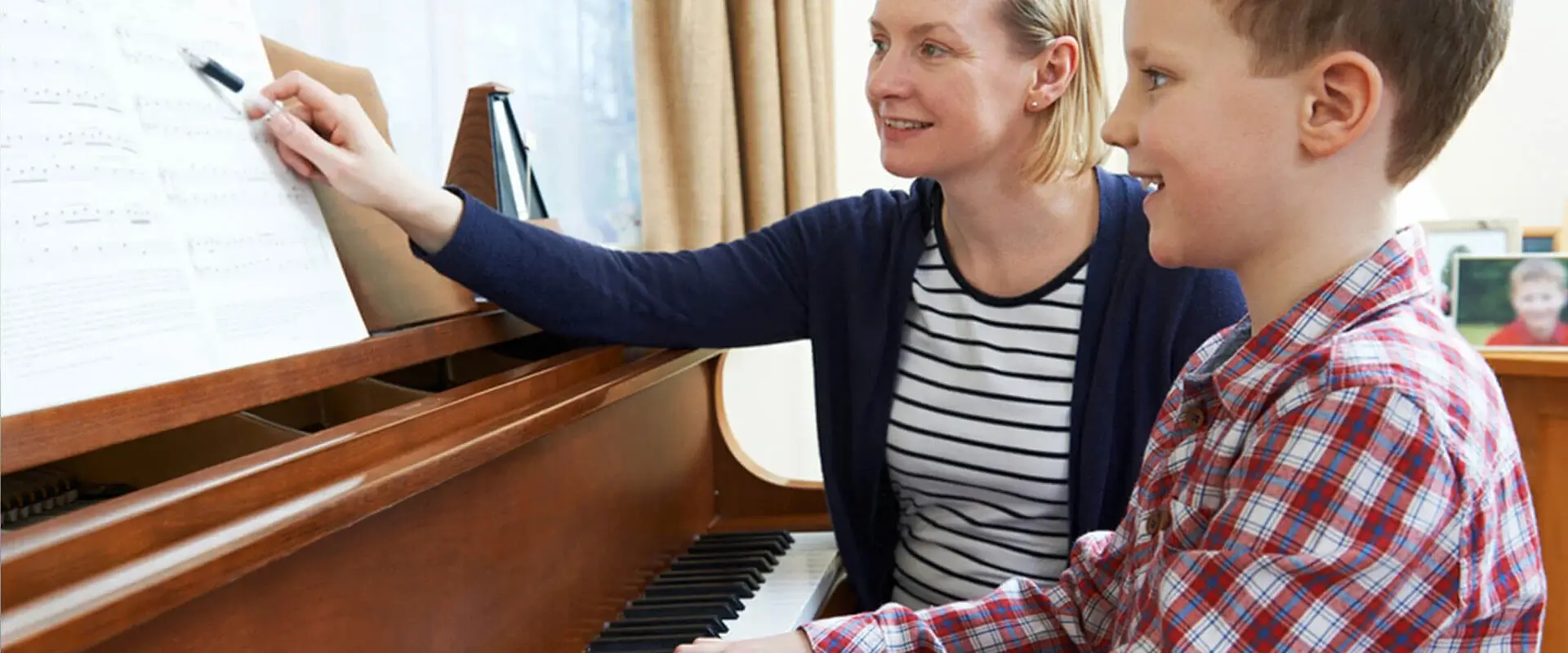
Here are just a few of the many teachers offering Piano lessons in Coppell . Whether you are looking for beginner guitar lessons for your kids, or are an adult wanting to improve your skills, the instructors in our network are ready to help you now!
Instruments: Piano
I teach theory and technique to my students by creating exercises tailored to their needs. Every student is unique, and my method reflects that. I also feel very strongly that music, and the piano in particular, is a subject that can be learned at any point in life. I have student of many different age groups, ranging from elementary school children to retirees looking to develop piano performance as a personal hobby. Read More
Instruments: Piano Guitar
I truly believe that if students are happy and enjoying what they play they will want to practice and sound better. I encourage students to try classical but we will dive into a more modern approach. Original compositions can also be a fun great way for students to want to practice. I also have a strong music theory and technology background to really make sure they are amazed by understanding the world of music. Read More
Instruments: Piano Guitar Trumpet Trombone Bass Guitar Music Keyboard Electric Guitar Acoustic Guitar
Most schools use the Hal Leonard Essential Elements and I tend to focus on this method as supplemental instruction but other methods are fine as well especially if the student is already working through a particular method book. For young students I encourage a mix of formal music instruction with music the student enjoys. Nothing unlocks a love of learning like discovering how your favorite music works! Adult students are welcome to tailor their lessons to their musical goals whether that's learning Bach or Breaking Benjamin! Read More
Instruments: Piano
My methods, practices and philosophies are first to get to know the student. What are their goals, expectations, likes/wants/needs, etc. - as I get to know the student, I will tailor the teaching materials to them. Whether it is Leonard, Bastien, Alfred (I have used them all), an eighth note is an eighth note, but you can play an eighth note in pop, rock, classical, jazz, show tunes, etc.. Read More
Instruments: Piano
For children beginners, I typically start with Hal Leonard's "More Popular" books. Once the student has begun to learn how to sightread and grasp the fundamental elements, I begin to introduce a repertoire suitable for the student's performance. For students who are a little bit older and have a little bit more experience I ask them what they would like to learn. I am a firm believer in asking the student what their goals are and what they are interested in. Read More
Instruments: Piano Guitar Voice Ukulele Acoustic Guitar
I love to sing and make music! I have sung with the Houston Symphony Chorus, Dallas Symphony Chorus, Mesquite Community Chorus, ASU Graduate and Doctoral chorales, and many worship teams, I have been in many musicals and was the lead in "Pirates of Penzance" and "The Consul". I was also in "Annie Get Your Gun", "South Pacific", and "Fiddler on the Roof". I was a soloist, singer, guitarist, and dancer in the show "TEXAS!" in the Palo Duro Canyon. Read More
Instruments: Piano Voice Organ
As stated, I have taught students of all ages, from pre-K to adults. I first began teaching while I was in college and have taught ever since. While most of my career has been spent teaching privately in fine arts academies and in students' homes, for the past 7 years I have taught high school choir in Keller ISD. I love to see my students succeed and have those "aha!" moments when their individual practice begins to pay off. Read More
Instruments: Guitar Violin Ukulele Music Electric Guitar Acoustic Guitar
Do you use specific teaching methods or books? (Ex: Alfred, Bastion, Suzuki, Hal Leonard) Why did you choose them if you did?
I do prefer essential elements, artist compilation books, theory handouts/worksheets, and sheet music. I tend to stay away from Suzuki methods since I find it too dependent on intervals rather than learning how to read sheet music properly.
What does a normal practice session look like for you?
I practice every day if I can. I generally recommend a practice be at least 30 minutes. I begin my practices by tuning and warming up which usually consists of working on older material, running through scales, etc. I like to keep practice logs so I check what I noted I've been working on, what I feel I want to keep working on, and I begin designing exercises to help me achieve that goal. I separate my content by focusing on different aspects such as precision, rhythm, speed, volume, and so forth. I close out by playing all the way through what I've been working on a few times and then leave some time at the end for creativity/improvising. See what you can make with what you have learned and then fill out practice log.
What advice do you have about practicing effectively?
I think keeping a practice log/journal of some kind and having moments of mindfulness and reflection during each practice is really important. I believe that what you put in is what you get, so get practicing! We will set realistic goals. Learning a skill like an instrument is a lifelong process. You will always be improving and learning new things if you keep with it.
Does music run in your family? Tell us a little about your musical family members.
No, I am the only one with a musical bone in my family. My family loves music and have always encouraged me but thankfully I had friends growing up that also played instruments and I played in school.
If you play more than one instrument, how did you decide to start playing the second? (Or 3rd, 4th, 5th, etc)!
I began with violin but that was through school. I picked up guitar, ukulele, and some piano through private lessons and self-instruction. Once you understand some general music theory and are familiar with an instrument, I find it is easier to start learning others. I'm always learning and improving though!
What is your favorite style/genre of music to play and why?
I think there is something of musical value in almost anything I listen to. I may not enjoy the style but maybe there was an interesting rhythm or effect. I try to share this mentality with my students and ensure we explore the different ranges music has to offer. I personally most enjoy blues/jazz, soul, and rock.
If you weren't a musician what do you think you'd be doing instead?
I teach music part-time. I am currently working to obtain my Massachusetts Teaching License in second language acquisition. I love music but I don't want it to be my main career so that is what I will be doing instead!
How do I know if my child is ready to start lessons?
It does require a certain level of maturity and concentration in order to fully grasp the logic of music theory and to apply that to playing an instrument.
When will I start to see results?
Learning music and an instrument is a lifelong process. You will learn things day 1 that you use for as long as you continue to play and practice. You will always be building from a foundation so the only place to go is up!
Why did you choose your primary instrument?
Even though I began with violin, I would say guitar is my main instrument. I generally practice and play it more since it is so versatile. Violin is a bit more specialized but fun and interesting nonetheless.
What do you think is the hardest thing to master on your instrument?
Personally, I have always struggled with sweep picking on guitar. If you're not familiar I'd recommend looking up some videos online. I've always wanted to be able to do them and can somewhat but not to the degree I would like. I would argue that is one of the hardest guitar techniques I've encountered. For violin, a lot of people have issues with shifting.
25 Years
Since We Started
41,456+
Happy Customers
10,769
Cities with Students
3,123
Teachers in Network
Trusted as the industry leader, for over 21 years the teachers in our network have been providing Piano lessons in Coppell to students of all ages and abilities.
We'll then reach out to the teachers for you.
Schedule the risk-free trial lesson directly with the teacher.
Continue with that teacher or try someone else.