630-936-4822





Musika Quick Stats
25 Years
Since We Started
41,456+
Happy Customers
10,769
Cities with Students
3,123
Teachers in Network
Lesson Special - Up to 20% OFF! Get Started Now with a Risk-Free Trial!
Here are just a few of the many teachers offering Piano lessons in Elmhurst . Whether you are looking for beginner guitar lessons for your kids, or are an adult wanting to improve your skills, the instructors in our network are ready to help you now!
Instruments: Piano Keyboard
My mindset when it comes to teaching is that if you are not having fun with music, then I am doing my job wrong. Everyone learns differently and wants to learn different styles of music. So each student gets a completely personalized lesson plan to fit their wants and needs. I encourage all my students to take things slow and to not get discouraged if they don’t get something right away. Read More
Instruments: Piano Guitar Violin Cello Viola Bass Guitar
I'm a well motivated instructor who enjoys working with students of any age. During and after college I found it rewarding to work with students in a classroom and private setting.Over the past 40 years my students recieved the same in depth musical education that I recieved with an added bonus due to my success and expirience as freelance musician. Read More
Instruments: Piano Guitar Voice Violin Cello Viola Trumpet Trombone Saxophone Clarinet Bass Guitar Synthesizer French Horn
From the very beginning of my work, I believe in positive reinforcement because I find that we all need our hopes and beliefs in our ability to accomplish something to be nurtured before we take on any challenge, objective or goal. This is very important because I also believe that presenting students with challenges and goals allows them to experience adventure, fun, and rewards- particularly in the context of music. Read More
Instruments: Piano Guitar
My goal in teaching is to make sure my student reaches their fullest potential. If something that I'm doing isn't working or getting through to the student I will make sure to adapt and find the right way to engage them. Positive encouragement helps a student grow in the healthiest way. My students understand, especially the more experienced ones, understand the importance of putting work into their craft. I am there to give you the tools for success. Read More
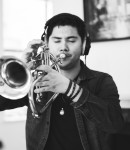
Instruments: Piano Trumpet Music Keyboard
A lot of the students I worked with were severely struggling with music at first, many of whom felt extremely insecure. The most important factor is making sure a student is comfortable. It is terrifying to play an instrument that you may be feeling insecure about, and a condescending or arrogant teacher will only reinforce the insecurities. I try my best to create a relaxed and animated environment to combat the initial insecurities. Read More
Instruments: Piano Voice Trumpet Drums Bass Guitar Keyboard
Basically I start with questions on why the individual wants to learn how to play that particular instrument. Then I follow with how much do they know about the instrument of their choice. So following a brief historical lesson we get into how to start playing that instrument. Also why I love to play that instrument and why I'm playing it with passion. I start teaching with basic scales or vocal warm-ups. Read More
Instruments: Piano Guitar Electric Guitar Classical Guitar Acoustic Guitar
For beginners at the start of the lessons, I usually get the know each student. Why would they like to learn? and What would they like to learn on guitar?; in order to make some reachable goals! Some will prefer to learn how to just physically play the guitar, and others may want a little more in depth understanding about the theory behind it and how to read music. When it comes to children, I believe the best way to keep them engaged and wanting to learn more is by making these lessons as fun as possible, while keeping nice and easy. Read More
Instruments: Voice Bass Guitar Double Bass
Why did you choose your primary instrument?
I didn't it chose me. Isn't that so cheesy to say. I started as a bass player, I always sang as well but I chose bass. I took lessons and had success in orchestras and bands as a bass player. But my desire for music was never enough so that lead to guitar and piano which lead me to harmonica and accordion and bagpipes and banjo. I kept picking up instruments and the one constant was that I was singing. Singing just made sense to me and I could be fully responsible for my instrument. So I became a singer and a teacher.
What do you think is the hardest thing to master on your instrument?
The simple most difficult thing to master when it comes to voice, especially in commercial styles is that what you hear is not what you get. What I mean by that is that the sound of resonance in your head is not the same as the sound coming out of your mouth. The task at hand then becomes mastering the feeling, singing by feel and muscle memory, knowing the right placements and vowels. That, I believe, is the hardest part of mastering voice. If not the hardest it sure doesn't make a whole lot of sense.
If you have a Music Degree, what is it in (Performance, Education, Musicology, Theory, Composition, etc) and why did you choose that degree?
I have a Bachelors of Music Degree from Belmont University. I majored in Vocal Preformance with an emphasis in history and pedagogy. So what that means is I have a degree in pop styles of singing. Commercial music would be pop, rock, country, folk, jazz, r&b, rap/hip-hop, modern musical theater and anything you hear on the radio. The history part means I am a music nerd and find it interesting to know useless fun facts about singers. The Pedagogy part means that I studied to learn how the voice works on a physical level and the theoretical side of how to control it.
What is your favorite style/genre of music to play and why?
I have performed in many styles. I am an accomplished musical theater actor, I was a jazz singer for 4 years at a restaurant, I have been in country bands, pop bands and everything in between. But my absolute favorite style to perform is Rock n' Roll. I love the theatrics and the high energy of it all. I was drawn into it, be the flashy lights but then was caught by the acceptance. The community surrounding the genre is so inclusive and welcoming and you feel that on stage while performing. Plus you get to wear leather pants and that is pretty cool.
Does music run in your family? Tell us a little about your musical family members.
In short yes. I always joke I grew up under my grandpa's piano. My great grandfather was a piano tuner around the Detroit area. He was the only person the famed Victor Borge would trust to tune his piano. My entire family sings, usually in 5 part harmony. I was very lucky to grow up with music, it helped me to develop a very good ear. I learned to play guitar by watching my uncle, and piano by watching my grandfather. My mom would play a game with us when we were little where we would pick a song like Twinkle Twinkle Little Star and she, my sister, and I would sing the song a half step apart from each other to train our ears.
When did you decide to become a professional musician? Was it a gradual decision or was there a defining moment for you?
I think I always wanted to be a musician. In what context has changed a bit. I wanted to be on broadway for a very long time, I also wanted to be a rockstar, and I wanted to be a teacher. The choice between musical theater and pop/rock came at college. I had been taking classical voice for years and loved it but I knew I wasn't going to be an opera singer. I applied to two highly recognized schools, one for theater and one for commercial music, and said which ever I get into I will go to. Well I got into both, and was offered scholarships to both, and not a single defining sign seemed to show itself. I took a chance and moved to Nashville to attend Belmont University after a lot of thought. And rock n roll recognition happened and I have had many incredible experiences from being in Nashville, but it seemed my favorite part was teaching private voice. So the time came and my wife and I moved to Troy, MI and the clear choice for me is to do the one consistent thing in my career, and that is teach.
25 Years
Since We Started
41,456+
Happy Customers
10,769
Cities with Students
3,123
Teachers in Network
Trusted as the industry leader, for over 21 years the teachers in our network have been providing Piano lessons in Elmhurst to students of all ages and abilities.
We'll then reach out to the teachers for you.
Schedule the risk-free trial lesson directly with the teacher.
Continue with that teacher or try someone else.