212-625-1520





Musika Quick Stats
25 Years
Since We Started
41,456+
Happy Customers
10,769
Cities with Students
3,123
Teachers in Network
Lesson Special - Up to 20% OFF! Get Started Now with a Risk-Free Trial!
Here are just a few of the many teachers offering Drum lessons in NYC, New York . Whether you are looking for beginner guitar lessons for your kids, or are an adult wanting to improve your skills, the instructors in our network are ready to help you now!
Instruments: Drums
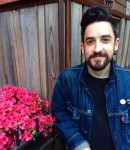
For drummer, composer, and producer Layton Weedeman, rhythm is more than a foundation, its a language of connection. Across a two-decade career, the New Yorkbased artist has explored jazz, hip-hop, soul, and global traditions, with collaboration at the heart of his work. His latest venture, Yellow Couch Music, is both a recording project and a creative collective rooted in improvisation, mutual respect, and deep groove. Its a space for building music thats human, open, and emotionally resonant. Read More
Instruments: Piano Drums Latin Percussion
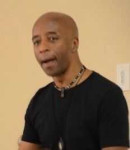
Every student is a universe in itself and every universe is unique and precious. I believe one of the most important things in teaching is understanding. Deeply understanding the student and be flexible to constantly find different and more effective ways to deliver, depending on each individual, is the strength of my method. Every student is a different world and every world is unique and precious. Ultimately, I believe lighting up the students inner fire of curiosity and passion, is one of the greatest lesson that can be taught. Read More
Instruments: Drums
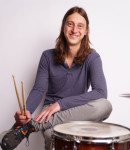
I use all types of books including Syncopation, Stick Control, New Breed, Advanced Funk Studies. Also I like to use other media where possible to teach different styles. Once the beginning student has progressed to have a grasp of the fundamentals, I will begin to introduce more musical applications related to real music. Preferably music the student is interested to learn to play. For adults, I try to find out what the student is interested in, and guide my instruction accordingly to keep the lessons engaging and fun, no matter their ability level. Read More
Instruments: Piano Guitar Drums Bass Guitar Banjo Ukulele
I have been teaching music since high school. I have a real organized approach to teaching that makes it easy to understand techniques and theory. I have played in many groups of all styles. The musical styles of these groups range from rock, folk, country, zydeco and blues. I have a Bachelor's degree in music from University of Massachusetts Lowell. While studying there I focused on producing and performing on recordings. Read More
Instruments: Piano Drums
My lesson are geared towards the aspirations of each individual student. I exhibit a great deal of patience in my teaching style. My overall goal in teaching is to provide the student with the tools, information, and direction to achieve there musical goals. I bring a wealth of real world experiences to my teaching. I enjoy teaching students that have the motivation and desire to work at improving their piano/drum abilities while having fun during the process. Read More
Instruments: Piano Guitar Saxophone Drums Bass Guitar Synthesizer Recorder Mallet Percussion Orchestral Percussion Latin Percussion Music Keyboard Electric Guitar Djembe Acoustic Guitar
Practice regularly: Consistent practice is key to improving as a drummer. I might encourage students to set aside a certain amount of time each day or week for practice, and to break down their practice sessions into smaller, more manageable chunks. 3. Use a variety of exercises: To keep things interesting and help students learn more effectively, I might incorporate a variety of exercises into my lessons. This might include rudiments, beats from different styles of music, and sight-reading exercises. 4. Read More
Instruments: Piano Guitar Drums Bass Guitar Synthesizer Orchestral Percussion Keyboard Electric Guitar Acoustic Guitar
I see teaching as a gateway to help students express their creativity, while incorporating a disciplined approach to help them achieve more from challenged in life in general. i don't simply field song requests, I also explain to my students the inner workings of why certain musical concepts work, why the artist may have chosen that and how you as the student can incorporate these creative ideas into your own compositions. Read More
Instruments: Piano Drums Mallet Percussion Orchestral Percussion
When will I start to see results?
Do anything long enough and you will see results but it's focus and consistency in your practice with a combination of patience that will produce results. You can see results every week with daily practice, this does not need to be an hour every day, 10 to 20 minutes and you will start to make progress!
What do you think is the hardest thing to master on your instrument?
Learning to slow down and focus on everything you are doing. I always wanted to play faster and better but it wasn't until I slowed myself down and learned to focus on the little details that I started to hear myself better and sound better.
Why did you choose your primary instrument?
I actually wanted to play Saxophone but my parents could not find me a suitable teacher at the time so I picked the drums and I'm so glad I did! Rhythm came very naturally to me and I loved the look of a drum set with a band. I still love the saxophone but I can't play a single note on it but that's okay, there are so many great ones to listen too.
How do I know if my child is ready to start lessons?
If they are asking for lessons themselves! I recommend to parents that they not push or force their child to play a particular instrument, usually the one they are interested in the most is the one they should start with. Now this does have some caveats as certain instruments like voice, woodwinds, or brass are better started after the age of 7 or 8 but there are ways to encourage them at home. Also, if a student is starting on piano but understands they can move onto their desired instrument as they get older, it will make it feel less like they are being kept from that instrument.
What advice do you have about practicing effectively?
Consistency is key! I always recommend to my students to set a timer and allow themselves a set amount of time to devote to practicing without interruption. This could be 5, 10, 15 or minutes or more depending on how much time you want to give to practicing. After the timer goes off, allow yourself to make the choice whether to continue or pick it up the next day. This way you have given yourself the time to improve but it doesn't feel like you have lost a whole chunk of your day. With daily practice it will become a habit and start to feel fun as you see yourself making progress!
25 Years
Since We Started
41,456+
Happy Customers
10,769
Cities with Students
3,123
Teachers in Network
Trusted as the industry leader, for over 21 years the teachers in our network have been providing Drum lessons in NYC, New York to students of all ages and abilities.
We'll then reach out to the teachers for you.
Schedule the risk-free trial lesson directly with the teacher.
Continue with that teacher or try someone else.