215-600-3556



Musika Quick Stats
25 Years
Since We Started
41,456+
Happy Customers
10,769
Cities with Students
3,123
Teachers in Network
Lesson Special - Up to 20% OFF! Get Started Now with a Risk-Free Trial!
Here are just a few of the many teachers offering Flute lessons in Philadelphia . Whether you are looking for beginner guitar lessons for your kids, or are an adult wanting to improve your skills, the instructors in our network are ready to help you now!
Instruments: Piano Guitar Saxophone Flute Clarinet Synthesizer Piccolo Mallet Percussion Orchestral Percussion Oboe Bassoon English Horn Acoustic Guitar
I love the learning process and to see students progress through the stages of learning an instrument. I taught myself to play the piano before I started formal lessons. I began playing the saxophone at the same time I took up the piano. I entered my undergraduate program in 1992, majoring in music education with the saxophone and piano as my principle instruments. During my studies at the University of South Alabama, a new program was started in MIDI and I attended an extra year to master digital audio. Read More
Instruments: Piano Flute
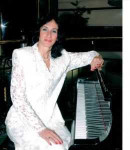
I have been playing and teaching professionally for 32 years. I perform approximately 50 gigs per month on piano and flute as a soloist or duo with my husband (who is a teacher and performer on classical guitar, also in the Musika family). I have enjoyed classical music since childhood and would be in awe of anyone with musical ability. I am happy to now be able to play pieces that I thought could only be played by people with exceptional ability. Read More
Instruments: Flute Recorder Piccolo
I love setting goals for my students and helping them to succeed. My students have won seats in district and regional band and orchestra competitions, play in competitive youth symphonies, and have participated in solo and ensemble recitals. I love teaching a wide range of students from those who are just looking to play for fun to students preparing for college music entrance exams. I try to keep my students very organized as I know time is precious in balance with many other extracurricular activities. Read More
Instruments: Piano Saxophone Flute Clarinet
A typical lesson will include Warm ups (for breath and tone development) Technical exercises (scales, etc.) Etudes (changes weekly) Solo repertoire (long-term study) Read More
Instruments: Piano Saxophone Flute Clarinet Keyboard
I am a passionate and professional teacher, performer, and composer on saxophone, flute, clarinet, and piano. After growing up in Seattle participating in many state and national musical events, I moved to Philadelphia to attend Temple University. I graduated with a Bachelor of Music degree in Jazz Saxophone Performance. I have had the chance of perform nationally as well as internationally, playing in venues like Seattle's Benaroya Hall and the Kennedy Center. Read More
Instruments: Flute
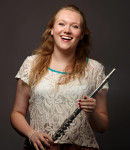
I currently teach in the public schools during the day, and I perform and teach by night. I love encouraging my students to develop their skills while maintaining their love of music and learning. Honing a craft should not crush creativity, it should not stifle their individuality. Music making should be natural, passionate, and my job is to give them the tools to become the flutist *they* want to be! Read More
Instruments: Flute
What advice do you have about practicing effectively?
Practice with purpose and intent. Play difficult passages slowly and build speed gradually.
Time is not the sole determiner, as people can put in the time but practice mistakes, errors, or unhelpful posture and finger positioning given physical demands of playing.
Best to rest after one half hour for about 10 minutes.
Take a break or walk away if frustration sets in. Clear the mind and then continue playing.
How do I know if my child is ready to start lessons?
Interest is first. Does your child sing songs, preferably with relative pitch? Do they show a sense of rhythm, repeating tapped patterns they hear. Do they talk about music, move to music, indicate a particular instrument or song preference?
When will I start to see results?
Depends, but should be heard right away with application at home noticeable. Results begin with interest. After the lesson and preparing before the next lesson, does your child put in time playing?
Did you have a teacher that inspired you to go into music? How did they inspire you?
Frances Blaisdell: Ms. Frances Blaisdell was a world class flutist and teacher. I started lessons with her when I was 12, at which time my family then moved to France for a couple of years. Lessons resumed when I was 14, up to my senior year of high school, when we moved to Hawaii, and again on and off while in college at Syracuse and after until Miss Blaisdell moved to California. There she taught flute at Stanford University for the next 35 years. She would send her many students a yearly holiday family newsletter that always had a personal note in it. This was throughout my adult life. Miss Blaisdell best personified what is best in the student teacher relationship. She was a model of what it means to be a truly remarkable teacher and musician where excellence was the expectation, her belief that it was attainable in her students, and her very specific content knowledge and instructional strategies to bring out our excellence. She was modest, kind, specific, encouraging, realistic, and inspiring. Her great dignity was/is rooted in her simple (and yet profound) respect for everyone she knew or met. Miss Blaisdell was also a trailblazer who touched countless thousands and yet she always gave you her full attention when she was with you. She is relatively well known as a teacher and musician, with information about her on Google.
Ted Dunbar: Ted Dunbar, a jazz guitarist and educator, was one of the founders of the jazz studies department at Rutgers University, now part of the Mason Gross School of the Arts. I took classes in jazz improvisation at Rutgers when I was in my mid 20s. Ted was also a registered pharmacist. Pharmacy became part time when he devoted his life to performance and teaching. While at Rutgers, Ted played with some frequency at major NYC venues and in Broadway pit bands. Ted was that kind of teacher that was above all inspiring. He also was an interesting role model in that underneath his great creativity was his studious nature and a systematic and sustained knowledge of jazz pedagogy. He was not only a master teacher and improviser but was able to articulate ways that we, his students, could specifically improve. Ted helped not only increase our understanding of jazz improvisation and history, but also sought to help us grow in our understanding of the creative process. He was also a teacher about life choices and suggested philosophers and thinkers that we should read. Ted was imposing and humorous, at times demanding, and other times kind and supportive. My father had passed a couple of years before I started classes with Ted – in some way, although I never told Ted, he helped to fill some of that void I felt in my life.
John Frascatore: Mr. Frascatore was my fifth grade teacher. There are several moments that I continue to remember, such as writing to classical music (“La Mer” by Debussy), or putting on plays (“The King and His Creampuffs”), and his reading aloud to us. What I remember most is the sense of community that existed in his classroom and the individual care and attention I sensed even then that Mr. Frascatore showed for every student. For me, a particular memory was a block I had learning long division. I could not have been more frustrated and thought I would never learn how to do this. This, though, was not an option for Mr. Frascatore. I can remember Mr. Frascatore patiently and supportively working with me one on one until I started to understand. With me, and other students, failure was not an option. This was his gentle gift and example in many different ways. I learned later that he had become a principal and director of curriculum and instruction. I did not know until I checked years later that Mr. Frascatore was an Army Air Force World War II veteran, flying 34 missions as a bombardier fighter pilot.
25 Years
Since We Started
41,456+
Happy Customers
10,769
Cities with Students
3,123
Teachers in Network
Trusted as the industry leader, for over 21 years the teachers in our network have been providing Flute lessons in Philadelphia to students of all ages and abilities.
We'll then reach out to the teachers for you.
Schedule the risk-free trial lesson directly with the teacher.
Continue with that teacher or try someone else.