
 415-508-6557







Musika Quick Stats
25 Years
Since We Started
41,456+
Happy Customers
10,769
Cities with Students
3,123
Teachers in Network
Lesson Special - Up to 20% OFF! Get Started Now with a Risk-Free Trial!
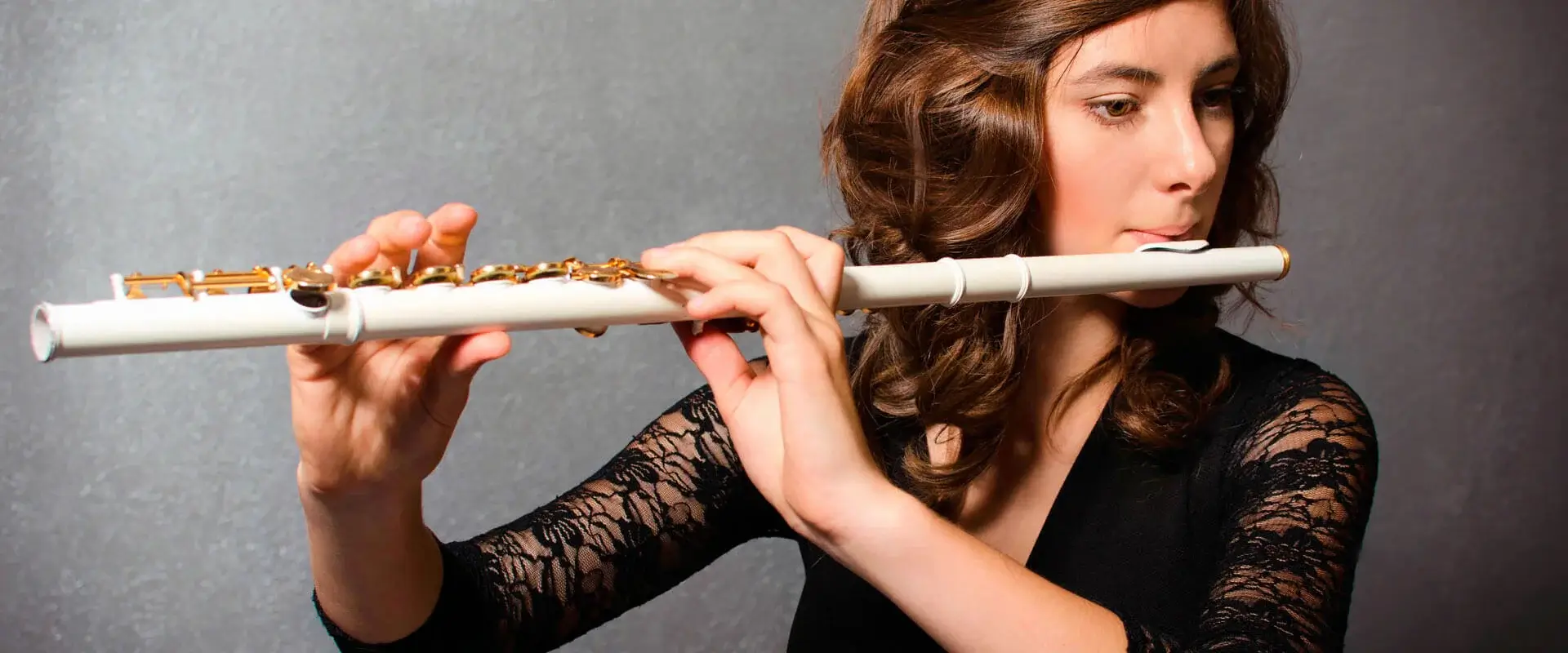
Here are just a few of the many teachers offering Flute lessons in San Francisco . Whether you are looking for beginner guitar lessons for your kids, or are an adult wanting to improve your skills, the instructors in our network are ready to help you now!
Instruments: Saxophone Flute Clarinet
For beginning students I like to start in the Standard of Excellence Series as well as the Rubank Method Books. I also try to allow my students a chance to play something they want at the end of lessons. As my students advance we add in classical pieces as well as jazz, and improvisation. Older students and adults we can fgure out what you want from the lessons. I try to work it so it is enjoyable for you yet not as elementary. The goal is to become advanced enough to create your own music. Read More
Instruments: Saxophone Flute Clarinet Recorder Piccolo
My lessons are typically structured in the following way: 10% Warm Up/Tone Development 30% Reviewing Mastered Material 40% Learning New Concepts and Material 20% Sight-Reading Read More
Instruments: Piano Guitar Flute Drums Ukulele Recorder Piccolo Mallet Percussion Orchestral Percussion Conga Latin Percussion Music Keyboard Acoustic Guitar
I learn by doing and I believe that my students should play what inspires them! If it's classical, let's study Bach and Mozart together - if it's Latin, let's study Dave Valentin and Johnny Pacheco. I have always had a broad taste in music and I think it's wonderful when students bring me songs that inspire them. Let's work the chords out together and study the greats! I believe that the engaged student will be the successful student. Read More
Instruments: Piano Flute Recorder Piccolo
During lessons, I often compare concepts to other activities my students know and love - their favorite sport, video games, or books. I love sharing my magic tricks - shortcut exercises to make tricky passages instantly easier, and youll definitely catch me encouraging my students to listen, listen, listen! Every genre of music has something different you can learn and it adds to your own creative toolkit. I expect students to practice regularly and thoughtfully - seeking to play their very best and working to improve every time they pick up their instrument. Read More
Instruments: Piano Flute Piccolo
I have been teaching lessons since I was in high school. I began teaching private lessons part time and have been teaching students on and off ever since then. I firmly believe in every student's ability to succeed and so I emphasize consistent, focused practice. I have helped multiple students gain a love for their instrument and go on to compete and perform as well. I encourage the students have fun and pursue their dreams. Read More
Instruments: Flute
I do not believe in a uniform approach for each person. Being in the right environment means everything for someone who is about to begin learning an instrument, be it his or her first encounter or not. This will manifest differently for each person. First impressions do mean everything in this case and that is why I am proud to say that anyone who has ever formally or informally attempted to find their embouchure with me or in front of me succeeded to find their voice. Read More
Instruments: Trumpet Trombone Saxophone Flute Clarinet Ukulele Recorder Euphonium French Horn Tuba Music
Making sure that the student is having fun, learning and achieving their musical goals is most important. I understand that each student progresses at their own pace and has diffrent goals and desires. While there are certian excersises that everyone needs to work on, solos and concert pieces are what students are drawn to. Therefore, I make sure that students are working on fun and challenging pieces that will keep them engaged in music. Read More
Instruments: Voice
How do I know if my child is ready to start lessons?
This is definitely one of the top questions I get from parents. If your child is consistently showing the desire to either sing or play an instrument, then it’s probably a good time to introduce them to a coach. By consistently, I mean for more than a couple of months. Children are fickle so you want to be patient to see if there is a persistence with their passion for a specific instrument.
Why did you choose your primary instrument?
I have been asked this question many times, and my answer is always the same, I didn’t choose my instrument, it chose me! I started singing at a very early age. My mom was the first one to notice my affinity for music and singing when I was five years old. One day while riding with her in our car, I started singing a song on the radio, and then started singing the harmony parts to the chorus. She immediately stopped the car, turned down the radio and asked me to sing a song with her. I can’t remember which one it was, but she then asked me to sing the harmony with her and I did. From that moment forward, she lovingly cultivated my passion for singing and the rest is history!
When will I start to see results?
You will start to see results after the very first vocal lesson guaranteed. The method that I coach is nothing short of incredible. It made me a more powerful, controlled, dynamic and conditioned vocalist, and it will do the very same thing for you!
What advice do you have about practicing effectively?
The advice I give all of my students for practicing effectively is One: Make sure you are practicing at least five days a week and optimally around the same time each day for scheduling consistency. Two: Always rest between exercises. Just like in the gym, give your muscles a chance to relax, and your brain a chance to allow the scope of the exercise to sink in between reps. 30 seconds is plenty of time between exercises. Three: Always start with a reasonable amount of time spent on each exercise before moving to the next. I have found that five minutes per exercise with 30 second rests in between is plenty to start with. As you become more comfortable and confident with the exercises, you can start adding time to each one for conditioning. Four: never let passion override your reason. Always be present in the moment to realize when your muscles are becoming fatigued. Each practice session will have an inflection point. Simply stop when you become overly tired.
25 Years
Since We Started
41,456+
Happy Customers
10,769
Cities with Students
3,123
Teachers in Network
Trusted as the industry leader, for over 21 years the teachers in our network have been providing Flute lessons in San Francisco to students of all ages and abilities.
We'll then reach out to the teachers for you.
Schedule the risk-free trial lesson directly with the teacher.
Continue with that teacher or try someone else.