
 415-508-6557





Musika Quick Stats
25 Years
Since We Started
41,456+
Happy Customers
10,769
Cities with Students
3,123
Teachers in Network
Lesson Special - Up to 20% OFF! Get Started Now with a Risk-Free Trial!
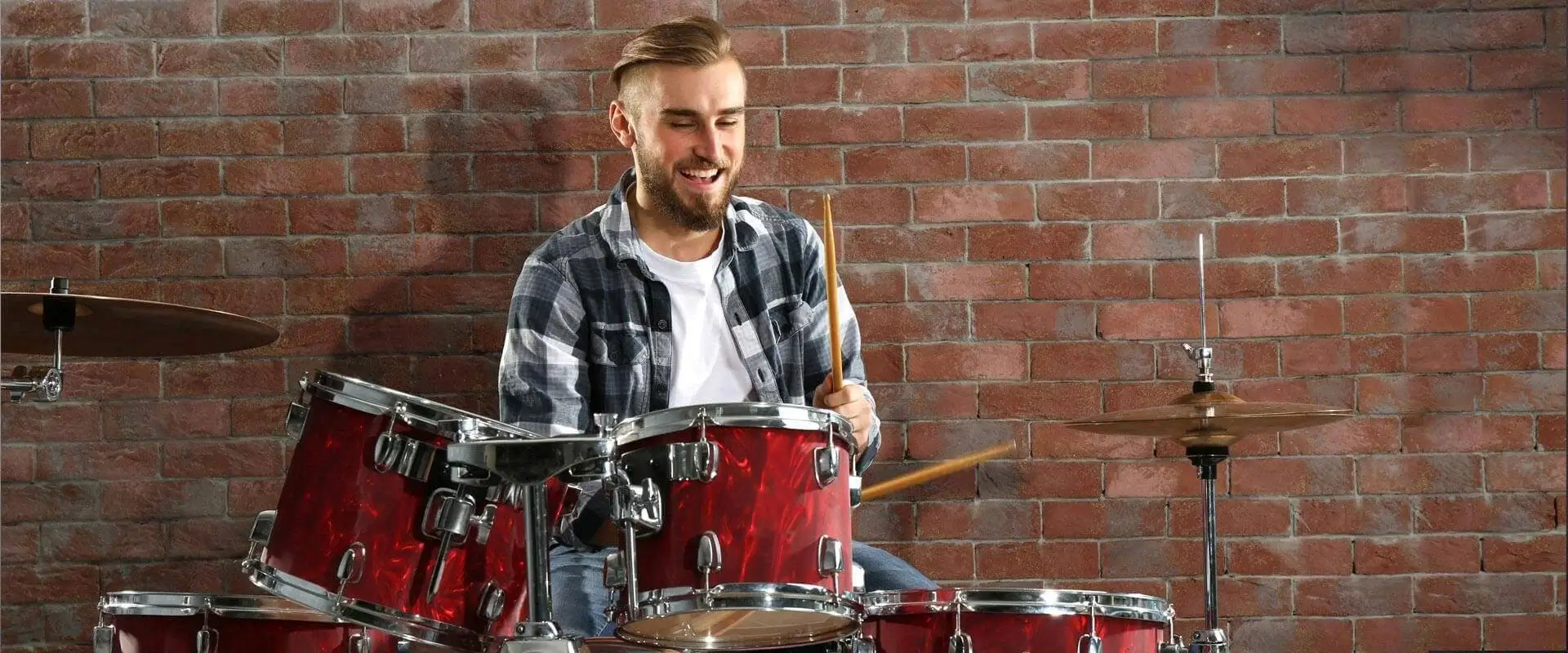
Here are just a few of the many teachers offering Drum lessons in San Francisco . Whether you are looking for beginner guitar lessons for your kids, or are an adult wanting to improve your skills, the instructors in our network are ready to help you now!
Instruments: Piano Guitar Voice Drums Bass Guitar Organ
It is important that each student progresses at their own pace with reasonable and realistic goals that they can reach. Acknowledging accomplishments helps fuel a students desire to achieve even greater challenges. My desire is to find what motives the student and create a curriculum that will refine them based on their desire. Read More
Instruments: Drums Latin Percussion Keyboard
It is vitally important that the environment of learning the drums be fun and comfortable. Nobody likes to come to a lesson stressed and nervous. This is not an audition, trust me, I've been in many of those and those are really stressful. Learning drums is going to be exciting, repertoire, and addicting, a good type of addict. Not only do I look forward to teaching a student how to play drums with me, but also learning at home with their own kit or practicing on a drum pad. Read More
Instruments: Drums Ukulele
I have a great system of teach the fundamentals of drumming by using warm ups that can progress the technique and skill of the individual. Its been a proven method of mine for years that I truly have the confidence that I can teach anyone how to drum regardless of their background in music. Im in tune of figuring out the learning curve of the individual that I can adjust according to the timing of the student. Read More
Instruments: Drums
My experience as a drummer is tihe following: i am professionally trained by some of the greatest and famous drummer in the world. I started taking private lessons at age 13. When i was 16 years old, I had my first recording contract with Decker Records, only after studying for 3 years. They were one the most of famous Record companies. When i was 15 or 16, i started playing professionally with Jazz bands and Rock bands in the New York area. Read More
Instruments: Drums
For 20+ years, I have been part of Cairo's diverse music scene, performing live with a variety of musical acts and teaching drums to students for 12+ years. I've had the opportunity to learn and play different genres with a particular affinity for rock, jazz/funk, electronic music and Egyptian percussion, having been the drummer for The American University in Cairo Arab music ensemble for many years. -Learn basic to advanced drumming skills: technique, independence, orchestration and understand different musical styles of drumming. -Choose to focus on drum kit, Egyptian percussion (tabla/darbuka, duf) or both. -All skill levels welcome (ages 5+) -Taught in a safe, fun environment in Upper Rockridge Read More
Instruments: Drums Orchestral Percussion Conga Latin Percussion
What musical accomplishments are you most proud of?
There are numerous projects I’ve been involved in that fill me with pride. For instance, the awards I’ve received from the Beyond Music organization. However, what truly excites me the most about the impact of music on my life is the numerous friends I’ve made through music.
Why did you choose your primary instrument?
At that time, I was listening to rock music, which primarily consisted of vocals, guitar, bass, and drums. Several of my friends played the guitar, but the drums resonated with me the most.
Did you have a teacher that inspired you to go into music? How did they inspire you?
What initially inspired me to make music was listening to music and the desire to be able to play that music myself. My teacher further fueled my enthusiasm by providing me with the necessary tools and encouraging me to continuously explore and embrace new musical genres, even those that might initially seem unfamiliar.
When will I start to see results?
Typically, in the initial stages, there will be very rapid results. However, after a certain period, which varies from student to student, there might be a slight plateau in the learning curve. Nevertheless, improvement continues. Ultimately, the time spent practicing the instrument is one of the sole factors that contribute to achieving results.
How do I know if my child is ready to start lessons?
Every child is unique, of course. Depending on their age, one option is to try a group class, not necessarily for a specific instrument, but rather for a general introduction to music that showcases various instruments.
If individual lessons are preferred, meet with the teacher to gauge compatibility and comfort for you and your child. A good and reputable teacher will never pressure you into a contract without an initial “getting-to-know-each-other” phase. They will also welcome parents to attend lessons.
What advice do you have about practicing effectively?
Here are a few pointers regarding efficient and effective practicing:
**Make it enjoyable:** Practice things you are interested in and which bring you fulfillment. However, don’t be afraid to challenge yourself.
**Be consistent:** Instead of dedicating an hour once a week, try practicing for 15 minutes four times a week.
**Focus on quality over quantity:** 20 minutes of dedicated and focused practice are far better than 60 minutes of sporadic or distracted practice (“noodling” around).
**Take breaks:** taking five-minute breaks during a session or a day off in between sessions helps your body and mind integrate new material more effectively.
**Be patient:** Some things will show in your playing immediately, while others may take weeks or months to find their way into your playing.
In my lessons, I delve deeper into all of these points and explore many more aspects of fun and creative practicing.
25 Years
Since We Started
41,456+
Happy Customers
10,769
Cities with Students
3,123
Teachers in Network
Trusted as the industry leader, for over 21 years the teachers in our network have been providing Drum lessons in San Francisco to students of all ages and abilities.
We'll then reach out to the teachers for you.
Schedule the risk-free trial lesson directly with the teacher.
Continue with that teacher or try someone else.