

 404-719-4198




Musika Quick Stats
25 Years
Since We Started
41,456+
Happy Customers
10,769
Cities with Students
3,123
Teachers in Network
Lesson Special - Up to 20% OFF! Get Started Now with a Risk-Free Trial!
Here are just a few of the many teachers offering Guitar lessons in Atlanta . Whether you are looking for beginner guitar lessons for your kids, or are an adult wanting to improve your skills, the instructors in our network are ready to help you now!
Instruments: Piano Guitar Voice Bass Guitar Mandolin
My teaching experince dates back to 2009, asI began studying music in Atlanta and teaching part time to supplement my living expenses.Upon graduation,I started working full timewith private lessons companies in the Atlanta areaand have seen great success amongst my students.My experience has beenwith beginners all the way toadvanced, professionalplayers and I love the challenges of the entire spectrum. My entire philosophy is based around my student's interest and having fun is the key element to the process. Read More
Instruments: Piano Guitar Voice Trumpet Trombone Saxophone Flute Clarinet Drums Bass Guitar Organ Synthesizer Harp Accordion Harmonica Recorder Lute Electric Violin Fiddle Double Bass Euphonium French Horn Tuba Piccolo Mallet Percussion Orchestral Percussion Oboe Bassoon English Horn Conga Latin Percussion Music Keyboard Djembe Acoustic Guitar
My passion for sharing knowledge begin during my time as high school tuba section leader, which led to Senior band president. Assisting my peers so we could sound better via musical corrections, this would build our confidence levels and the moral throughout the ensemble. I furthered my passion for music at Berklee College of Music, where I studied various aspects, methods, and approaches to educating someone about the art of music. Read More
Instruments: Guitar Bass Guitar
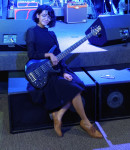
I have two years of experience as a bass instructor in private and group-based lessons. Connecting with students from ages 6 to 45, I bring a knowledgable approach and genuine love of music to students who look to find their groove. For all styles of learners, I incorporate a wide range of material to acommodate students' personal interests. It's my goal to guide students to discover their creativity and passion for music, helping them express their soul through their instrument for a lifetime of enjoyment. Read More
Instruments: Piano Guitar Violin Cello Viola Drums Bass Guitar Ukulele Recorder Double Bass Music Electric Guitar Acoustic Guitar
I believe lessons should be fun. Yes, learning music can and should be challenging. But it also needs to be fun. I am a very performance-oriented teacher. So, once I get to know a student, we begin preparing to perform. If we are having fun while we work, we don't even realize we are working. Giving students really solid practice skills they can do on their own keeps them engaged. Read More
Instruments: Piano Guitar Voice Drums Bass Guitar Mallet Percussion Orchestral Percussion Keyboard Electric Guitar Djembe Classical Guitar Acoustic Guitar
I am an individual and group music instructor with a background in music education and music performance. I'm a founding member of Implosion Percussion, a professional percussion ensemble focusing on contemporary works, a music festival called New Music on the Bayou, and the Founder and former executive director of the Percussive Arts Institute of Ruston in Ruston, LA. I am experienced working with students with learning disorders and Behavioral concerns, such as anxiety and autism. Read More
Instruments: Guitar Electric Guitar Acoustic Guitar
I grew up appreciating music at an early age as my dad was an avid music listener of classical, jazz, new age, and feature film soundtracks. At the age of 20 I started to get interested in learning the guitar because I loved the way acoustic guitars sounded. I studied in the music programs at Pasadena City College and Mount San Antonio College for a period of about 2 years. I took guitar lessons privately for about 3 years. Read More
Instruments: Piano Guitar Drums Bass Guitar Ukulele Keyboard Electric Guitar Acoustic Guitar
My teaching methods are relatively universal. With younger students, I focus more on learning to have fun while learning about their instrument at the same time. The more fun they're having, the more likely they are to stick to it. For adults, I keep this same philosophy in tact, but incorporate more technique, theory, and performance practice into our sessions in order to facilitate the learning curve. Once I know what my student enjoys about music, I tailor my lessons around that. Read More
Instruments: Piano Guitar Voice Violin Cello Viola Trumpet Trombone Saxophone Flute Clarinet Drums Bass Guitar Organ Synthesizer Harp Accordion Harmonica Lap Steel Guitar Banjo Ukulele Mandolin Recorder Lute Electric Violin Fiddle Double Bass Euphonium French Horn Tuba Piccolo Mallet Percussion Orchestral Percussion Shakuhachi Oboe Bassoon English Horn Conga Latin Percussion Music Keyboard Electric Guitar Djembe Classical Guitar Acoustic Guitar
What does a normal practice session look like for you?
First of all, my 'normal' practice session has changed over time. It is not the same today as it was when I was 10, 15, or 20. These days, I practice a lot of difficult classical repertoire, so much of my time is spent on those pieces. I start by picking the hardest spots and working on those, then perhaps I will play through the whole piece to measure my progress and to maintain the easier parts as well. I also spend a lot of time practicing sight reading, since my professional work requires a high level of accurate reading. I will choose a different composer or genre every day for reading, which helps keep things fun and new!
If you play more than one instrument, how did you decide to start playing the second? (Or 3rd, 4th, 5th, etc)!
While piano is my primary instrument, I also play trumpet. I wanted to be in band in school, so when we started in 6th grade I gave trumpet a shot and liked it! I practiced both instruments nearly every day throughout middle and high school before I decided to focus more on piano in college.
Does music run in your family? Tell us a little about your musical family members.
Music is a family activity for me, and one that constantly brings us together. In fact, my brothers and I just recorded a cover of The Beatles' "When I'm Sixty-Four" for my mother, complete with new lyrics about her and three-part vocal harmonies to boot. All five of us play and we love to talk about it and play together!
When did you decide to become a professional musician? Was it a gradual decision or was there a defining moment for you?
My decision to become a professional musician was a funny combination of gradual and also at a defining moment. I have played and practiced my whole life, and it was always my top extra-curricular activity. I always loved it and at various points tried to envision a life as a professional musician. It seemed, in many ways, like an obvious choice. However, when I went to college, I started a dual-degree program in music and my other passion, computer programming. The program was structured such that I completed my music studies first, then switched to computers. But when it came time to switch, I had already found work playing professionally and I realized that my interest in computers as a career had waned. Even knowing that a career in computer programming would be stable and lucrative, I decided to leave it behind and go full force into building a music career. And I have never looked back! It would have been easier to follow the computer path, since it is a path well-traveled. But forging my own path and being able to keep music in the foreground of my life is far more rewarding!
Why did you choose your primary instrument?
Piano is my primary instrument, and I chose it for several reasons. It is one of the most versatile instruments on the planet - every dance hall, theater, school, church, and even many homes have pianos in them, and they can be used in nearly any style or ensemble. It is the instrument of composers and conductors as well because it allows them to hear a piece holistically. But most importantly, I found piano to be the most fun and challenging. I never get bored! When you find the instrument that does that for you, stick with it.
When will I start to see results?
It varies. The more frequent, consistent, and methodical your practicing is, the more quickly you will see results. Patience is a virtue! Some areas of musicianship may take longer to show results than others. Additionally, some results are harder to see than others. For example, progress in scales or a difficult passage are more obvious than progress in sightreading.
How do I know if my child is ready to start lessons?
I usually don't begin lessons with young children until they can read. Learning to read music is very much like learning to read text, so having that baseline is extremely helpful. The ability to sit and follow directions for 30 minutes is also very helpful!
What advice do you have about practicing effectively?
Don't just start at the beginning of a piece and struggle your way through it. To practice effectively, zoom in on the spots that give you the most trouble. It is far easier to master one or two measures at a time than to tackle the whole piece at once. And once you can play that spot correctly, repeat repeat repeat! Don't practice until you get it right; practice until you can't get it wrong.
25 Years
Since We Started
41,456+
Happy Customers
10,769
Cities with Students
3,123
Teachers in Network
Trusted as the industry leader, for over 21 years the teachers in our network have been providing Guitar lessons in Atlanta to students of all ages and abilities.
We'll then reach out to the teachers for you.
Schedule the risk-free trial lesson directly with the teacher.
Continue with that teacher or try someone else.







Susan
I'm looking for a beginner level teacher in guitar for my son, he's 16. I may be interested in beginner piano for myself if the schedule can be flexible.
Owen
My husband plays a little guitar, but my 4year old is super interested every time he plays. I would like to see about lessons for him. He loves music,!!
Cameron
I know the basic chords, a,b,c,d,em,f and want to expand my knowledge. i also want to learn how to play tons of praise band and non praise band songs.