615-815-1867


Musika Quick Stats
25 Years
Since We Started
41,456+
Happy Customers
10,769
Cities with Students
3,123
Teachers in Network
Lesson Special - Up to 20% OFF! Get Started Now with a Risk-Free Trial!
Here are just a few of the many teachers offering Piano lessons in Franklin . Whether you are looking for beginner guitar lessons for your kids, or are an adult wanting to improve your skills, the instructors in our network are ready to help you now!
Instruments: Piano Keyboard
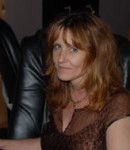
I emphasize positive, fun, joyful learning and I use multimedia to make the lesson more colorful and modern. I have one foot in the traditional "Old School" and one in cutting edge learning techniques. I completely tailor each person's lesson plans to emphasize the strengths of the student. Some people learn through hearing, while others need to learn through touch and coordination. Those with shorter attention spans enjoy faster rotation through activities, which is effective for children as young as three years of age. Read More
Instruments: Piano Voice Violin Viola Trumpet
For beginning students I generally use the Suzuki books and have had some training in the method. I don't use a strict Suzuki method but combine it with a more traditional approach by including note reading, scales, etc. I also use the Faber books in conjunction with the Suzuki for piano. For adults I generally give them the option of choosing the music they would like to learn and then try to incorporate some of the technical elements by using scales and Hanon exercises. Read More
Instruments: Piano Voice Music Keyboard
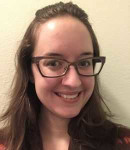
My performance experience started at a very young age and consisted of entertaining myself in front of the mirror (at age 2), and creating shows for family. I started doing musicals and concerts at church around age 4 and entered community theatre around age 6. My enthusiasm for the performing arts continued to grow throughout childhood, and my teenage years. I started private Voice lessons at age 16 and studied Musical Theatre at Kent State University for the first two years of college. Read More
Instruments: Piano Guitar Flute Piccolo Oboe Music Acoustic Guitar
For beginners, I start off with the basics. For example, naming each string on the guitar, curvature of the fingers, embouchure on the headjoint of a flute, and achieving a crow on an oboe reed. For school age children, I use books or sheet music used in their own practice at school or Youth Orchestras during lessons. For any ability level, I use any materials during lessons that my students want to work on that achieves their goals but also keeps them motivated. Read More
Instruments: Piano
For all students (beginners and students with prior experience) I begin with teaching scales and arpeggios. Scales and arpeggios are the foundation of keyboard technique, and are found in all piano repertoire the student will encounter. I generally use the Macfarren Scale and Arpeggio Manual for older children/adults (those who read music) or the Scales, Chords, Arpeggios, and Cadences: First Book (Alfred) for children. If my student cannot read music I teach them scales and arpeggios without music, while teaching them how to read music from a method book. Read More
Instruments: Piano Voice Mallet Percussion Orchestral Percussion
The method used for teaching a student how to enjoy music should be practical, intuitive, and natural. I begin by training a student how to listen (in the same way that a child would hear words before he could speak). From that point, a student learns to "speak" or play musical sentences. Finally, the reading skills are developed. Through this approach, musical literacy is founded and then the art of mastering the instrument begins by developing sensitivity and fine musicianship. Read More
Instruments: Piano Voice Violin Fiddle
My teaching style is completely dependent on the needs and goals of the student. However, the structure of all my lessons are similar. Half of each lesson will be dedicated to technique and half of the lesson will be dedicated to a piece/tune that the student has chosen and wants to work on. I structure my lessons this way so that way the student has agency in their own learning and can learn the things they want to learn, while also building a strong technical foundation Read More
Instruments: Piano Voice Saxophone Synthesizer Keyboard
What is your favorite style/genre of music to play and why?
Jazz is my favorite because it is so complex and deep. In jazz you have improvisation (composing in the moment), comping (playing chords and interacting with other musicians), playing melodies in a personal style that can be different every time, keeping the form and structure of the song, playing with rhythmic precision to play with other musicians at the same time, the ability to listen to the soloists and make instant changes to go in any direction that the soloists wants to go. I started playing jazz when I was 13, and just hated the "Old People's" music. Then I got fascinated with it and got hooked. Jazz and Classical music are the two hardest genres of music. If you study both of those genres, you can play any type of music and with whomever.
If you play more than one instrument, how did you decide to start playing the second? (Or 3rd, 4th, 5th, etc)!
I started playing my second instrument the saxophone 2 years after I started piano. After I learned to produce a good sound, and the fingerings for the different notes on the saxophone, it was easy to play all the songs because I had two years of musical basics under my belt learning treble clef and bass clef. The piano in a polyphonic instrument which means you read treble and bass clef at the exact same time. The saxophone was a monophonic instrument able to play just 1 note at a time. The saxophone was an say instrument to learn because of my piano background.
I've learned to play other instruments also like the E. Bass, Drums, Trumpet, Flute, and Clarinet. It's just a matter of learning the fingerings and how to produce a note to play the other instruments. The language of music is the same in any instrument, just the technical and sound production is different. I always recommend students to start out on piano and get 2-3 years of continuous study before switching to a different instrument.
Does music run in your family? Tell us a little about your musical family members.
Yes music does run in my family. My great grandfather was a professional touring piano player in the 1920s, 30s, and 40s. He died before I was born, and I never got the chance to meet him. My grandfather played the piano very well, and he was my very first influence on the piano. I was amazed and fascinated when he played and loved hearing him play. My mom took lessons for several years and got quite advanced. I remember hearing her play Boogie Woogie, and was in awe how good she was and a little jealous that she could just sit down after not playing for years, and play like that. My father played guitar and sang. He was in a rock band when he was a teenager called "The Gents".
When did you decide to become a professional musician? Was it a gradual decision or was there a defining moment for you?
I always knew I was going to be a professional musician. As a kid, I used to listen to Elton John, Stevie Wonder, Barry Manilow, Michael Jackson, Oscar Peterson, Richard Clayderman, Elvis, etc. I used to close my eyes while the music was playing and imagine myself playing the keyboard parts. My parents took me to a lot of concerts and exposed me to a lot of music growing up, and I always knew I wanted to be able to play like the people on stage. There have been many times that I doubted wether I'd ever get to that level, but you just keep working at it for a long long long long long time and you get to that level.
25 Years
Since We Started
41,456+
Happy Customers
10,769
Cities with Students
3,123
Teachers in Network
Trusted as the industry leader, for over 21 years the teachers in our network have been providing Piano lessons in Franklin to students of all ages and abilities.
We'll then reach out to the teachers for you.
Schedule the risk-free trial lesson directly with the teacher.
Continue with that teacher or try someone else.