
 310-935-4532





Musika Quick Stats
25 Years
Since We Started
41,456+
Happy Customers
10,769
Cities with Students
3,123
Teachers in Network
Lesson Special - Up to 20% OFF! Get Started Now with a Risk-Free Trial!
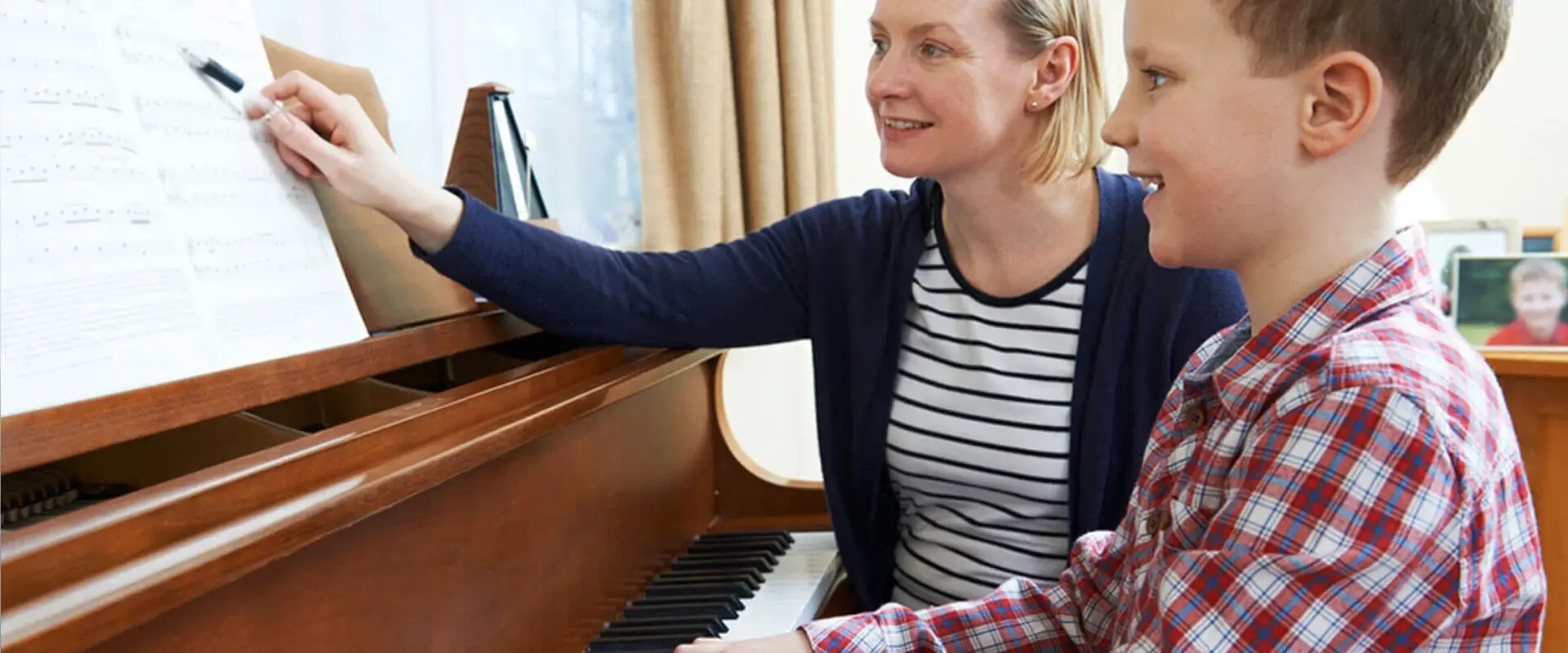
Here are just a few of the many teachers offering Piano lessons in Lakewood . Whether you are looking for beginner guitar lessons for your kids, or are an adult wanting to improve your skills, the instructors in our network are ready to help you now!
Instruments: Piano Guitar Voice Music Keyboard Electric Guitar Acoustic Guitar
For classical and opera singing, I teach a healthy Bel Canto technique rooted in the Italian school of singing. I am also skilled in teaching SOVT style, but I typically avoid it with beginning singers. For musical theater and pop, I teach healthy belting techniques that preserve vocal quality and focus on a connection to the chest and body, alleviating vocal tension. For my guitar students, I teach fingering techniques and basic chords first, and then I focus on giving each student a basic repertoire--several pieces they already know and like to showcase their abilities and track progress. Read More
Instruments: Piano Guitar Voice Music Keyboard Electric Guitar Acoustic Guitar
I have been teaching for over 5 years. I began as a private lesson coach and have been consistenatly growing with students for around 7 years. As well as song and technical technique, my students and I also focus in on composition, songwriting, improvosition, discovery of sound and direction, and artistry. I combine both clossical and modern technique's and combine them into a personalized lesson and practice plan for the student. I believe in steady but fun practice out side of classes and encourage my students to run through pieces or excersizes around 5 times a day or for around 15 minutes. Read More
Instruments: Piano
My Beginning Piano lessons are perfect for first-time musicians. Students will learn the basics of piano skills, musical theory, and basic chords to get them making music at the piano quickly. My Intermediate Piano explores a higher level of technique, including improvisation and reading more complex music. My Advanced Piano is for students who have been playing consistently for over 5 years. I provide in-depth guidance in style, interpretation, harmony, and performance. Read More
Instruments: Piano Guitar Drums Bass Guitar Orchestral Percussion Conga Latin Percussion Electric Guitar Acoustic Guitar
I have been teaching privately since 2006. I specialize in jazz drum set, but I can teach all sorts of styles of music as well. In addition to drum set, I teach rudimental, marching and classical snare drum, classical percussion (mallets, timpani), afro-cuban percussion (congas, bongos, timbales), sight reading, music theory, and beginning piano. I also have experience teaching high school drumlines, as well as jazz and rock bands for middle school and high school students. Read More
Instruments: Piano Saxophone Flute Clarinet Drums
I'm an extremely dedicated and passionate performing artist, composer, and instructor with a BM in Jazz Studies from the USC Thornton School of Music. I love all aspects of playing, teaching, and writing music, but my favorite part is sharing my passion with others and watching a similar passion grow in themselves. I have been playing saxophone for about 12 years, flute and clarinet for 7, and drums and piano for the past 3 years (so I can only accept beginning drum and piano students.) I love all types of music and will work with you on any genre you want to work on while improving your overall facility on your instrument! Read More
Instruments: Piano Guitar Bass Guitar Double Bass Music Electric Guitar Classical Guitar Acoustic Guitar
My methods are geared toward the individual. Oftentimes I might start with a methods book for a beginner, but supplement it with musical choices by the individual. In selecting these choices, I find ways to simplify the music so that the student is able to be able to play it. My method is also based on questions that the student might ask. So while we will have an approach that is organized and structured, I find that addressing seemingly unrelated musical questions, can actually be incorporated into the tasks at hand. Read More
Instruments: Piano Trumpet Trombone Bass Guitar Synthesizer Euphonium French Horn Tuba Music
Hello! I'm MJ and I'm a working musician in the SoCal area! I graduated from Concordia University Irvine with a degree in Music Composition in May of 2022 and am ready to share my knowledge with anyone who wants it! I am primarily a trumpet player but am also capable of playing the Piano, French Horn, Bass, Handbells, and more. I'm also very passionate about writing music and am particularly invested in the Video Game Music industry. Read More
Instruments: Cello Music
If you have a Music Degree, what is it in (Performance, Education, Musicology, Theory, Composition, etc) and why did you choose that degree?
I have a Masters Degree in Cello performance and a Bachelor's Degree in Cello Performance. Both these degrees focused on the study of playing the advanced-professional cello. I picked the cello out when I was 10 and ever since then, I never looked back because this is the instrument for me.
What is your dream piece to perform and why?
There is a beautiful piece composed Ernest Bloch entitled "The Prayer", absolutely beautiful. This piece is gorgeous on the cello and after learning it several years ago, I would love to perform it at some time. I might have an opportunity to play this piece this year.
This piece depicts the calm and quietness of the Jewish people. He wrote this piece for Hans Kindler, with the intent to capture the Jewish spirit and soul.
What does a normal practice session look like for you?
Assuming this question is truly about practicing and not a lesson. Then practicing should involve slow and thorough practicing by reading the correct notes, knowing which finger needs to be associated with the note. This should be done every day in order to learn each note. then on the 3rd day playing the entire piece. At this point, if you have some errors, isolate what is the problem, fix that problem after 5 times. Then back up one measure and try playing two measures together. If your problem is fixed then you practiced correctly. After this point, start from the beginning and your problem should have been resolved.
Do you use specific teaching methods or books? (Ex: Alfred, Bastion, Suzuki, Hal Leonard) Why did you choose them if you did?
Yes I use String Builder by Applebaum. This book is very helpful because it is a step by step method, that way there is a logical order in which the student learns. There are other books such as Alfred, Hal Leonard, or Suzuki, but I am very happy with the String Builder.
What do you think is the hardest thing to master on your instrument?
I think the technique of learning how to vibrato is the toughest part of the learning process. It requires a lot of patience and due diligence of practicing. The process is slow and ugly sounding, but if done right it sounds great.
Have any of your students won awards or been selected for special honors? How have they succeeded?
I have two high school students who have won scholarships from Music Teachers Association where each received $300 towards private lessons. These same students are now in their 1st year of college and continue to play at the community level. In addition, one of my students played a solo piece with my orchestra 2 years ago when she was only 15.
25 Years
Since We Started
41,456+
Happy Customers
10,769
Cities with Students
3,123
Teachers in Network
Trusted as the industry leader, for over 21 years the teachers in our network have been providing Piano lessons in Lakewood to students of all ages and abilities.
We'll then reach out to the teachers for you.
Schedule the risk-free trial lesson directly with the teacher.
Continue with that teacher or try someone else.