
 970-232-2940




Musika Quick Stats
25 Years
Since We Started
41,456+
Happy Customers
10,769
Cities with Students
3,123
Teachers in Network
Lesson Special - Up to 20% OFF! Get Started Now with a Risk-Free Trial!
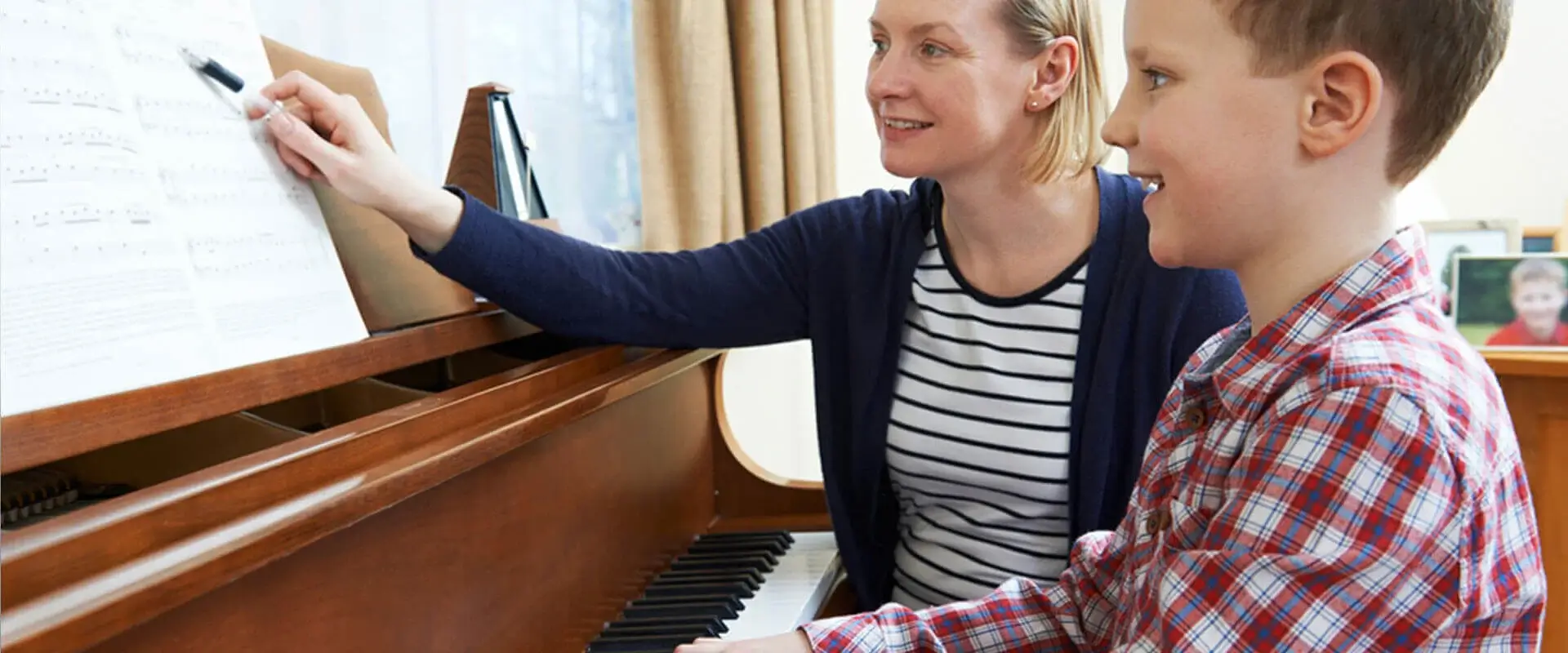
Here are just a few of the many teachers offering Piano lessons in Fort Collins . Whether you are looking for beginner guitar lessons for your kids, or are an adult wanting to improve your skills, the instructors in our network are ready to help you now!
Instruments: Piano Guitar Voice Violin Cello Viola Trumpet Trombone Saxophone Flute Clarinet Drums Bass Guitar Synthesizer Recorder Electric Violin Fiddle Double Bass Euphonium French Horn Tuba Piccolo Mallet Percussion Orchestral Percussion Oboe Bassoon English Horn
I am a highly motivated, hard-working, and outgoing individual. I love people and believe thatteachingmusic lessons is one the best ways to connect with students of all ages and develop a relationship with them. I started learning piano in Kindergarten, began Saxophone in my 5th grade Band, and started tutoring other band students in 6th Grade. In 7th Grade I earned scholarship to attend Illinois Summer Youth Music Camp at the University of Illinois. Read More
Instruments: Piano Organ
Since teaching my first piano lessons 10 years ago I realize that, as a teacher, you never stop learning. There can always be better ways to do things. I believe that a holistic view of teaching provides a full spectrum of knowledge to my students; this includes theory, improvisation, and popular tunes (in addition to sight reading and technique). I try to increase motivation to play the piano by asking them what their favorite songs are and then finding a way to arrange them to their level. Read More
Instruments: Piano Guitar Voice Drums Banjo Electric Guitar Classical Guitar Acoustic Guitar
Naturally, my method will adapt to each student's needs. This will depend firstly on what style of music we are working to develop. Next, I will base my approach on the students level of abilities. There are a number of things to consider, such as technique, aural capacity, intuitive understanding, and basic theoretical knowledge, as well as each student's particular personality traits and best method of receiving information. I have a large repertoire of pedagogical literature and performance pieces. Read More
Instruments: Piano Trombone Clarinet Drums Bass Guitar Euphonium Tuba Piccolo Mallet Percussion Orchestral Percussion Conga Latin Percussion Music Keyboard
The first thing I do when teaching a student is to learn what musical goals and aspirations the student may have. Then, depending on age and experience, I build a custom program for the student, which may include using various books, resources, and even materials which I have created. I have found that this is not only the most effective way for me to teach but also the most effective way to connect with students where they are and for them to learn at their own pace while also enjoying the process. Read More
Instruments: Piano Keyboard
I was my own first student. I began teaching myself how to play the piano over 10 years ago. Throughout this process I learned how to approach some typically confusing topics in much more digestible ways. A benefit to starting out as a self taught musician is that I had to learn how to make sense of things myself rather than memorizing information that a teacher fed me. A main focus of mine as a teacher is encouraging regular practice routines where the student can solidify the information we discuss in our lessons as well as uncover new questions they may have about the subject. Read More
Instruments: Piano Voice Trumpet Organ
I have taught lessons, throughout college and after, with interests ranging from classical to jazz, rock and pop. Engaging oneself musically every day is a motto of mine, keeping the motions and techniques sharp, as well as the elements of time and immersion that exponentially promote growth and creativity. If there is anything worth learning it is definitely anything that sounds good to you! A good basis of technique and classical styles is huge and I strongly encourage these before anything, but creativity and personal expression are important concepts to invest in. Read More
Instruments: Piano Voice Cello
What advice do you have about practicing effectively?
One of the most important things about practicing is consistency. It is better to practice 15 minutes every day than to practice 2 or 3 hours in one day every week. It is also important to make sure that you practice with good posture and breath. It doesn't matter if you are a vocalist or an instrumentalist, breathing is essential! How you practice breathing will always affect how you perform. When practicing, feel free to slow things down in the beginning. Use a metronome when appropriate. Also, having a mirror to practice in front of may be helpful. By all means, work on the things your instructor has given you to work on. Stay present and learn to enjoy practicing.
How do I know if my child is ready to start lessons?
Are they willing? If so, they are ready. It may depend somewhat on what instrument they are wanting to learn, but the basics of most instruments can be taught at an early age. Sometimes they will have to start on a miniature instrument. The second question is, "Is the rest of the family ready to deal with them practicing?" Many instruments don't sound good when beginners first start. Beginner level instruments are much more difficult to play than professional grade instruments. Add that to the fact that they are being played by inexperienced students and the sound is not always going to be very pleasant. Still, this does not mean they aren't ready or learning.
When will I start to see results?
There are certain results you can look for within the first week of taking lessons. Does the student have more inspiration, energy and excitement toward learning and practicing? Do they feel confident and encouraged or overwhelmed and discouraged? There are other things to look for when measuring results. Are they making new sounds and feeling more free to experiment? Becoming more aware of freedom from tensions can be a huge result and will often lead into other results like better intonation and improved and fuller tone quality. Some things can happen rapidly at the start. Other results may take years of practice and performing. At times results will seem to come suddenly after months or years of working on the same things. What kind of exposure students have had with music prior to taking lessons plays an important roll. Sometimes, as is often the case with singers, there may be bad habits that have to be disentangled from their muscle memory. Results (in terms of the time it takes for freeing up the vocal chords to phonate without subglottal or supraglottal pressure) will vary from student to student.
Why did you choose your primary instrument?
I chose singing as my primary instrument for many reasons. Firstly, my own body is literally the instrument and I used it with my very first breath. It is easy to bring along, and though difficult to take care of, it is the chief instrument of expression and communication of my life. It is this same instrument I have cried with, laughed with, and sighed with in all the best and worst moments of my life. My voice was there for me when I said my first word. My voice is the best revealer of my heart, my thoughts, and my intentions. While it is the most difficult instruments to master--every feeling, thought as well as sickness will affect the way it sounds-- to me it is the most worthy instrument to learn to wield. When I was born my grandmother looked at me and announced to everyone that I would be a great singer that would travel the world. Since I was a boy I have found great joy in making songs and singing my heart out. There have been great challenges to overcome in learning to sing better, but there are moments when I sing where it feels as though I am making worlds or flying through new realms of consciousness and bliss. I'm able to give myself to others with love and hope. It is these moments that makes all the painful work and resistance worth facing. To sing is to live. To sing well is to live well.
25 Years
Since We Started
41,456+
Happy Customers
10,769
Cities with Students
3,123
Teachers in Network
Trusted as the industry leader, for over 21 years the teachers in our network have been providing Piano lessons in Fort Collins to students of all ages and abilities.
We'll then reach out to the teachers for you.
Schedule the risk-free trial lesson directly with the teacher.
Continue with that teacher or try someone else.