
 214-865-6379







Musika Quick Stats
25 Years
Since We Started
41,456+
Happy Customers
10,769
Cities with Students
3,123
Teachers in Network
Lesson Special - Up to 20% OFF! Get Started Now with a Risk-Free Trial!
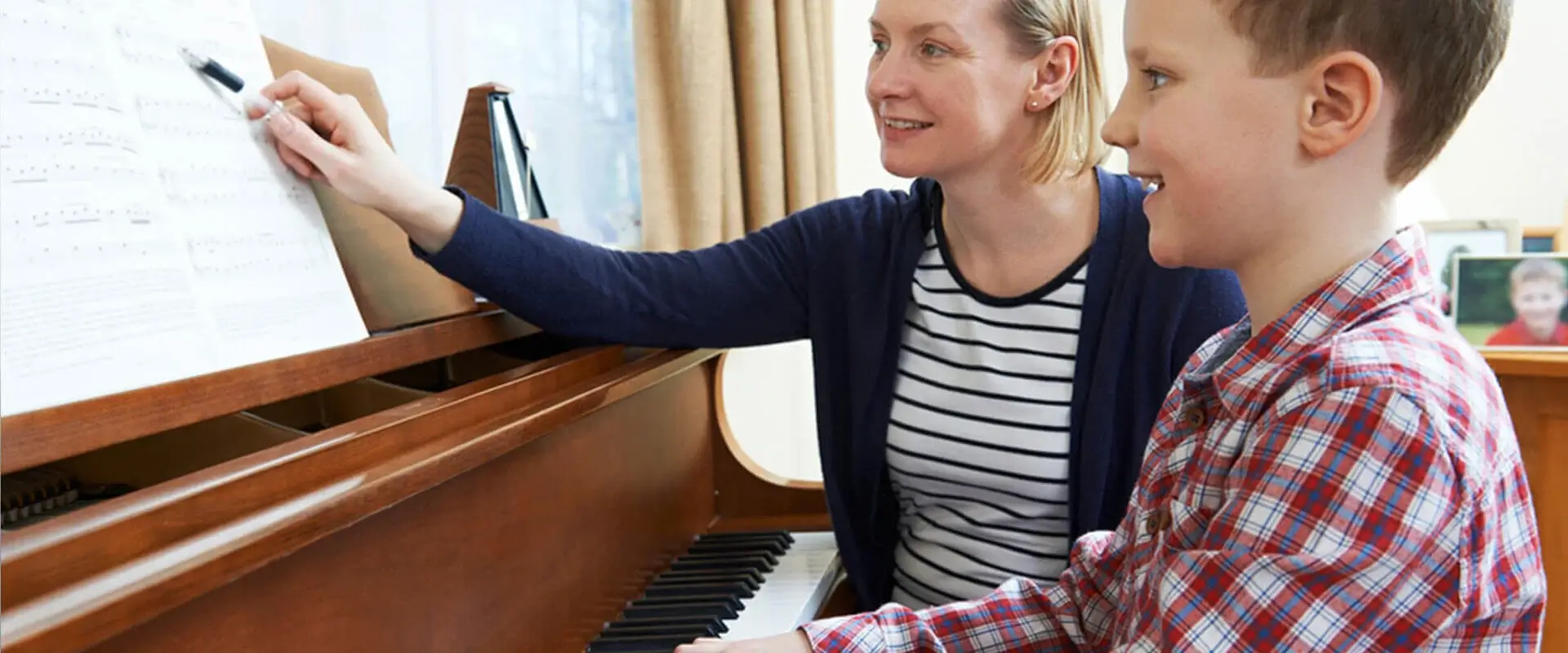
Here are just a few of the many teachers offering Piano lessons in Garland . Whether you are looking for beginner guitar lessons for your kids, or are an adult wanting to improve your skills, the instructors in our network are ready to help you now!
Instruments: Piano Saxophone Flute Clarinet
I have been playing piano since age 6 and clarinet since age 10. During my time at university I was taught to play all of the woodwinds, focused on pedagogy and music technology, and achieved many awards and recognition. My clarinet/woodwind pedagogy instructor was a student of Himie Voxman, author of many woodwind teaching method books. My university band was, at that time, considered one of the best in the state of SC, and was invited to play at the state music educators' convention in 2003. Read More
Instruments: Piano Guitar Voice Violin Ukulele Recorder Music Keyboard
My teaching style is more hands on approach, I have a lot of opportunities for my students to perform. I believe that actually playing the instrument will make them better players and performers. Even when a student sign up for private lessons, I have opportunities for them to perform in groups. I think that students learn better when they have the chance to perform in a group. I also hold master classes for the students to learn from. Read More
Instruments: Piano Guitar Voice Ukulele Acoustic Guitar
I enjoy teaching music so much and I want my students to enjoy their lessons and have fun while learning! We play or sing duets together, which is fun and also helps students' gain confidence in their skills. I use a wide variety of method books and music styles while engaging with students in their music lessons. I learn so much from my students! Let's learn more about music together! Read More
Instruments: Piano Voice Saxophone Organ
Over the course of my career, I have refined his teaching methods to become very effective at taking complex information and breaking it up into simple steps. This approach has allowed me to achieve a high record of success in learning and performing music. Read More
Instruments: Piano Cello Music Keyboard
Depending on my student's age and skill level I usually have them begin with Suzuki books, Essential Elements books, or a combination of the two. As students advance I often incorporate etudes and/or exercises by Lee, Dotzauer, Galamian, Mooney, Sevcik, Duport, and Popper. While ear training is an essential skill that I teach to all of my students, the younger a student is the more I'll have them "play by ear" instead of reading sheet music. Read More
Instruments: Piano Trumpet Recorder Music Keyboard
The child must not be nagged or pushed to practice, this leads to burn out, and or that child may not succeed in the process of learning music. I will teach accordingly to the child's basic interests and desires to learn the instrument. The child will advance if he or she puts effort into the daily lessons of practice which makes the playing better. I have recently discovered new techniques in teaching to improve stuffy, airy, clenched sounds it has improved my ability to play in the upper register. Read More
Instruments: Piano Organ
My main goal in teaching is to bring out the best in my students. I make sure to take into account each students learning style and to go at their pace. My wish is to give students the tools that they need to succeed and then to allow them the freedom to fly with that. The main concept that is essential to growth in art is practice. Students will need to understand the importance of practicing regularly in order to nurture the art and develop as a musician and person. Read More
Instruments: Piano Voice
What is your favorite style/genre of music to play and why?
I love singing Opera and the classical style of music because I feel like it is the "Olympics" of singing. It takes the voice to the very extremes, not only of range and difficulty, but also of emotion. You have to have full control of your instrument to make this genre of music come alive and have any sort of meaning.
I also love the variety of the genre. There are so many operas from so many different centuries that are all different and come with their own challenges. I love exploring the characters and trying to put my own spin upon any that I am assigned to perform.
If you have a Music Degree, what is it in (Performance, Education, Musicology, Theory, Composition, etc) and why did you choose that degree?
I have a very unique BA in Church Music. This seems to stir up questions every time it is brought up. I have a very religious background and I totally attribute any success I have had to my church upbringing and to God who guides me every day. I went to a Christian university for my BA and this major was all about how we use music in church and the different avenues that can take. I interned at a local church that had a choir, an orchestra, and a praise band all working together. I would help bring the music together, sing on the praise band, help direct the choir, and lead all of the many branches of this group when the main leader was away.
Now I lead worship at my own church, while I also teach music and perform around the island of Hawaii.
What advice do you have about practicing effectively?
Establish 3 small goals you want to accomplish during your given practice time that day. Know what you want to get done before you go into that room. That really helps you stay focused and gives shape to your practice time.
Keep track of your practice with a recording device. Listen back to yourself frequently so you can hear your progress. This is also handy for when you go to our voice lessons. Record what I say during your lesson so that during the week you can recall it much easier and you can hear the changes we make in your voice, and easily recreate it again and again in your practice time.
How do I know if my child is ready to start lessons?
I think this is more up to the child, especailly when it comes to singing. If the child asks you for voice lessons, that would be a good indicator that they are willing to put work into. If there is no indication of desire, it will be very hard for them to put in the effort to accomplish the goals they will have for their voice lessons.
If your child is already singing and maybe doing a show or something at school (or outside even) and they feel frustrated or like they could be doing more, maybe this is a good indication that lessons could really help them, not only with their music, but feeling more confident in the role they have to play.
When will I start to see results?
This is totally dependent on the person themselves. If you are dedicated and keep up with your practice, you could see results very soon. But if you don't practice and don't really take time out of your day to focus on getting better, then you won't get better.
Every person is different, so everyone will have a different time period in which results will be evident. Some people need more time to master the basics of singing than others since it is a very physical thing. Just like some people are more gifted in a certain sport than others at first, but that doesn't mean that with a little practice, you can't catch up or even surpass others' skill.
Did you have a teacher that inspired you to go into music? How did they inspire you?
My mother was my first music teacher. She was my music teacher in Kindergarten and has been a musical influence throughout my whole life. She began my love for music and my father was also a great influence. He plays guitar and gave me my first guitar at age 13. I began playing in or worship band and began to sing harmonies as well and then when I went to college, I had the same vocal teacher that my mother had, as we went to the same college only 30 years apart. Her name was Virginia Cameron and she helped my technique in so many ways to develop me into the singer I wanted to me.
My teacher now, Dr. Maya Hoover, has also really helped me to develop a more mature sound and helped me to feel more confident in my singing and like I have full control over my voice.
25 Years
Since We Started
41,456+
Happy Customers
10,769
Cities with Students
3,123
Teachers in Network
Trusted as the industry leader, for over 21 years the teachers in our network have been providing Piano lessons in Garland to students of all ages and abilities.
We'll then reach out to the teachers for you.
Schedule the risk-free trial lesson directly with the teacher.
Continue with that teacher or try someone else.