
 410-343-7555


Musika Quick Stats
25 Years
Since We Started
41,456+
Happy Customers
10,769
Cities with Students
3,123
Teachers in Network
Lesson Special - Up to 20% OFF! Get Started Now with a Risk-Free Trial!
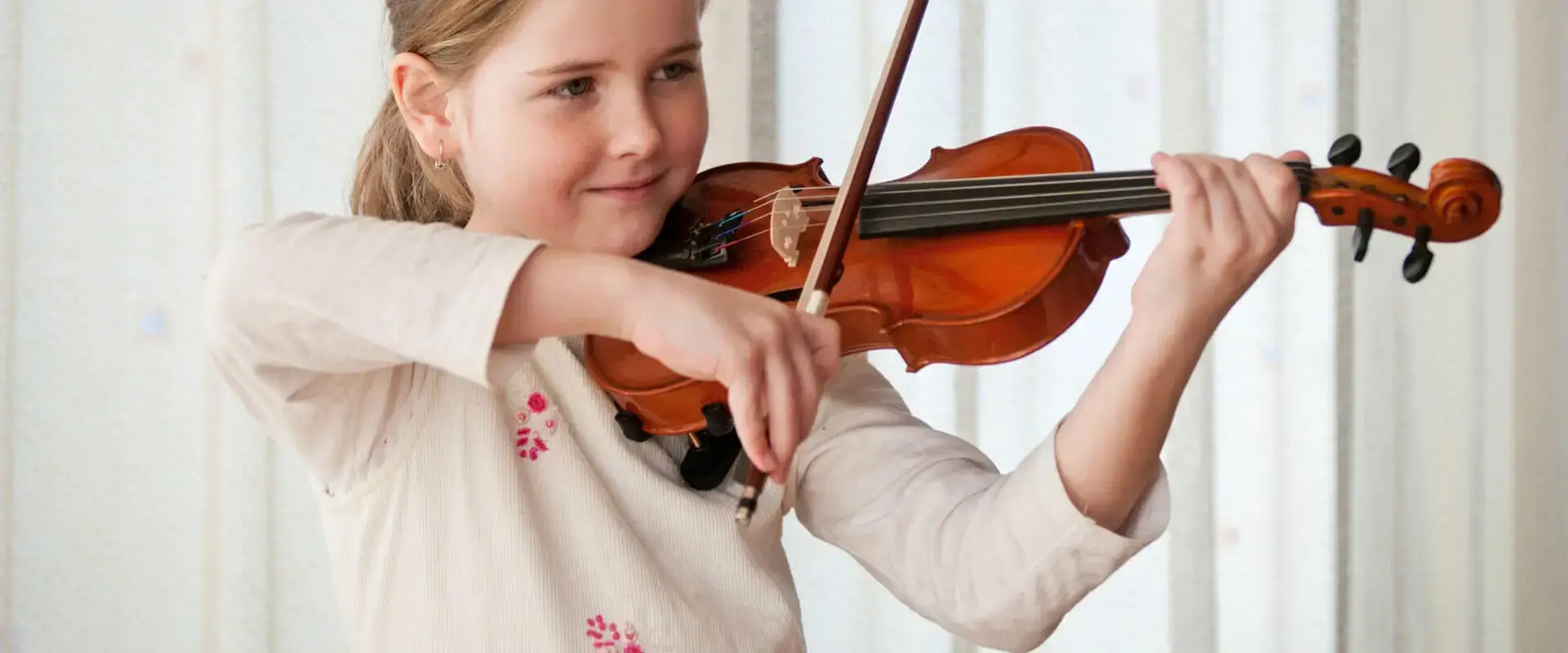
Here are just a few of the many teachers offering Violin lessons in Baltimore . Whether you are looking for beginner guitar lessons for your kids, or are an adult wanting to improve your skills, the instructors in our network are ready to help you now!
Instruments: Violin Viola
I try to cater to the each student's particular needs. For beginning students that are children I typically start with the Essential Elements Strings Book 1 in combination with Suzuki first book. As every student progresses at a different pace, I adjust my teaching curriculum accordingly. Having that in mind, I decide on the next step, usually some solo repertoire, as well as some more etudes and scales. For adults, I tend to go with what they are particularly interested in, as well as incorporating learning basic music reading and playing skills. Read More
Instruments: Violin Fiddle
I teach traditional Appalachian/Old Time and Irish fiddle in a fun, learn-by-ear style that's pretty accessible to anyone beginning or more advanced. As a lifetime fiddler player and music historian, I provide a cultural and and musicological background to a wide array of folk traditions in the U.S. and throughout the world. I have a flexible approach to teaching, and can work with classical notation and sheet music, in addition to playing by ear and improvising. Read More
Instruments: Violin
I think the violin is very special. It’s such a difficult instrument that requires lots of commitment and dedication. I would have never reached my level now if it weren’t for the teachers who were firm and persistent with me. I translate this back to my own teaching methods so I am a firm teacher but at the same time I do my best to make lessons engaging and that my students take pride in their improvements. Read More
Instruments: Violin
I have helped students achieve their goals as young as 4 years old and into their college years! I am trained in the Suzuki Method, but I also feel comfortable teaching any preference and learning style. I particularly enjoy teaching younger musicians and have focused my work on beginner students, as young as preschool. However, because of my extensive performing experience, I have been able to see many of my students into universities where they have continued to play the violin at top levels. Read More
Instruments: Violin Viola
My teaching style for young beginners is fun and encouraging. I stay very positive to encourage and motivate them. There is nothing like seeing young students staying focused and playing very confidently and feel good about themselves. That is very rewarding to me. I also show them how to practice with a clear demonstration and I like to build them up with good basics like good intonation, accurate rhythm and counting observing the dynamics and bowings carefully. Read More
Instruments: Piano Violin
I use traditional method for the students who like to pursue classical music and I teach modern music for those who are not so interested in classical music. Even though I use Suzuki method for violin, I emphasize sight reading and theory. For Suzuki students, I encourage them to memorize whole book and perform before move onto next level. For the young students and beginners, I strongly recommend parents observe the lessons so that they can support and help students to practice. Read More
Instruments: Violin Viola
Did you have a teacher that inspired you to go into music? How did they inspire you?
The many teachers that I have had in high school were the main reasons why I decided to go in to music. My high school orchestra teacher is a professional bass player and he continues to inspire me as I grow older. I was also a member of various youth orchestras, all of which had very inspirational teachers. I hope to inspire my students to go in to music or at least continue their music while they pursue other things.
Why did you choose your primary instrument?
I chose my primary instruments, the viola, because of my father. He told me that as a baby, I would bob up and down whenever the violas had a solo in any classical music piece that we would listen to together, so he knew that the instrument was meant for me. Additionally, the viola is an instrument that gets enough time in the spotlight, but it primarily serves as the supporting role in an ensemble. I feel that the viola is perfect for me because my personality is extroverted enough to enjoy being in attention part of the time, but I excel the most when I support my colleagues and friends.
What musical accomplishments are you most proud of?
I have been a member of the Civic Orchestra of Chicago, which is the premier training orchestra in the Midwest. It is associated with the Chicago Symphony Orchestra, so we got to perform at Symphony Center and our coaches were members of the Chicago Symphony. Additionally, I was also a member of the Baltic Sea Philharmonic, which is comprised of members who were selected from a pool of musicians that are from one of the 10 countries that border that Baltic Sea.
If you have a Music Degree, what is it in (Performance, Education, Musicology, Theory, Composition, etc) and why did you choose that degree?
I have both a Bachelors degree in Music and a Masters degree in Music Performance. I chose these degrees because I have always felt that I shined the most in music and that I couldn't picture myself in a job that didn't require me to perform, teach, or discuss music on a daily basis. I pride myself in receiving my masters degree from Northwestern University because that is where I believe that I was pushed to my limits as a musician. I have learned to perform and teach at very high level because of the degrees I have attained.
What advice do you have about practicing effectively?
Practice passages that are tricky slowly at first and then slowly pick up the tempo (preferably using your metronome!). Taking the time to play slowly first helps wonders and helps technique.
25 Years
Since We Started
41,456+
Happy Customers
10,769
Cities with Students
3,123
Teachers in Network
Trusted as the industry leader, for over 21 years the teachers in our network have been providing Violin lessons in Baltimore to students of all ages and abilities.
We'll then reach out to the teachers for you.
Schedule the risk-free trial lesson directly with the teacher.
Continue with that teacher or try someone else.