
 215-600-3556





Musika Quick Stats
25 Years
Since We Started
41,456+
Happy Customers
10,769
Cities with Students
3,123
Teachers in Network
Lesson Special - Up to 20% OFF! Get Started Now with a Risk-Free Trial!
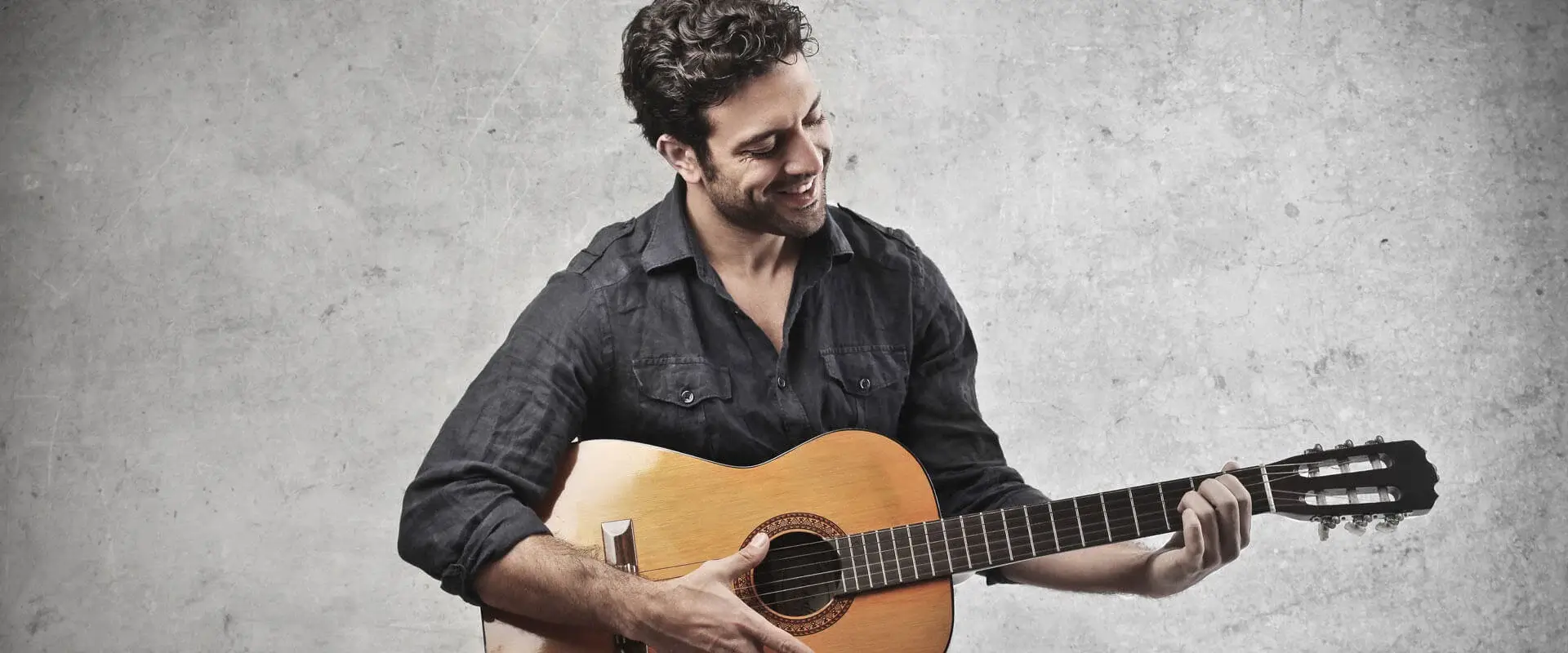
Here are just a few of the many teachers offering Guitar lessons in Philadelphia . Whether you are looking for beginner guitar lessons for your kids, or are an adult wanting to improve your skills, the instructors in our network are ready to help you now!
Instruments: Guitar Banjo Electric Guitar Acoustic Guitar
: Nothing is more rewarding than seeing one of my students develop a passion for music! Therefore, it's important that each student progresses at his or her own pace. I encourage this by setting realistic goals for my students at each lesson. Acknowledging accomplishments helps fuel a students desire to progress, and makes students eager to learn more. By trying to find out what inspires the student, I can successfully tailor my instruction to their wants and needs. Read More
Instruments: Guitar Bass Guitar Electric Guitar Classical Guitar Acoustic Guitar
Hailing from Philadelphia area, I grew up in a family of professional musicians. My diverse musical life has brought me to a number of stages: solo recitals, jazz big band, and electro-rock to name a few. While I love playing, I bring just as much passion to teaching, and love helping people of all ages achieve their goals and to help them find their way. Learning music is as much about the journey as the end goal, and I try to make that journey as fun and worthwhile as possible. Read More
Instruments: Guitar
For a beggining student the main focus is to have an enjoyable experience whilst acheiving the fundamental elements required to play the guitar. By focussing on the music they enjoy incorporated with some of the techniques required to play the instrument their growth becomes apparent quickly. As they progress on the instrument we start to dig deeper into the techniques and theory behind the music they love whilst introducing them to new things. Read More
Instruments: Guitar Electric Guitar Classical Guitar Acoustic Guitar
With each student it varies. I usually start by getting to know the student in finding out the key points that they are trying to achieve and work on. After that I go in depth by showing them hands on techniques and styles that will help improve their plane as well as music theory concepts that will improve their writing abilities and song structure style. Each student is different in their own way of learning so I vary my teaching based off of that. Read More
Instruments: Guitar Synthesizer Music Electric Guitar Acoustic Guitar
I like to set realistic goals for students to achieve. The most important thing is that they develop a love and passion for the language of music and learn to communicate through it! This takes a lot of time and can be frustrating at first so I often have students focus more on completing tasks than on how long they're playing every day. This helps them maintain a healthy relationship with music where they feel like they're achieving something right from the beginning! Read More
Instruments: Guitar Drums Bass Guitar Music Electric Guitar Acoustic Guitar
For students who are children I like to start to start learning rhythms through common children’s songs to show how easy music can be. Depending on the instrument, one of the many Hal Leonard books is always a good option. If they are a little older, I will use music that they like to teach how music theory and fundamental skills makes up all the musi they enjoy. We will often learn songs that speak to them and I will use their favorite genres to curate new songs to teach and show them new material and how it relates to their instrument. Read More
Instruments: Piano Guitar Saxophone Flute Clarinet Synthesizer Piccolo Mallet Percussion Orchestral Percussion Oboe Bassoon English Horn Acoustic Guitar
I began playing piano for church choirs in my hometown. During my college years, my private lessons experience began when I would give pointers to my fellow music majors who had to pass piano proficiency as part of their degree requirement. Furthermore, I am from the school of thought of concentrated practice. I help students identify the length of time they can concentrate without exhausting their attention. I always want students to have in mind the goals they want to accomplish in taking lessons such as recitals, competitions, showcasing and/or enrichment. Read More
Instruments: Piano Guitar Voice Keyboard Electric Guitar Acoustic Guitar
What advice do you have about practicing effectively?
Students need to practice at least four days a week, covering everything we've gone over in the lesson. Don't worry about mistakes - think of them as questions from your fingers that can be answered in the lesson.
How do I know if my child is ready to start lessons?
If he/she can: sit still and pay attention for half an hour,
recognize colors or
count from 1 - 5
recognize numbers from 1 - 5
When will I start to see results?
Immdeiately. For children the first lesson consists with keyboard games and simple exercises that they can do either on their own or with the help of a parent. From there we move on to simple songs that they can play on their own or with a bit of parental help. For adults, we begin with very basic exercises, and I give very clear instructions that students can follow from the first day we work together.
Did you have a teacher that inspired you to go into music? How did they inspire you?
My second teacher, Mrs. Natalie Cherney, was a tremendous inspiration. She was a great player and a fair, tough teacher. I think of her all the time and am always grateful to her.
Why did you choose your primary instrument?
Not sure with piano. I started asking for one when I was three. For guitar, I wanted to play in the folk choir at the Catholic school I went to. I thought acoustic guitars looked extremely cool and sounded incredible. I started teachimg myself when I was nine.
What musical accomplishments are you most proud of?
Putting together a tour of New England colleges (using Amtrak and Greyhound) on the strength of a demo cassette. In February, no less.
What do you think is the hardest thing to master on your instrument?
Speed and volume dynamics for piano - the mechanics of expression. For guitar rhythmic complexity is challenging.
Do you use specific teaching methods or books? (Ex: Alfred, Bastion, Suzuki, Hal Leonard) Why did you choose them if you did?
I use John Thompson method books in beginner piano classes with children. The songs are wonderfully tuneful and provide a solid introduction to the musical structures and techniques needed to play classical music. When students are done with the first grade book, I move on to the Guild Repertoire books, for a wonderful cross-section of Baroque, Classical, Romantic and Modern piano literature. For guitar, I use the Mel Bay method books. I love its clarity: the guitar neck diagrams and explanations of note values are very easy to understand. I also like the way they introduce string-to-string playing gradually.
What does a normal practice session look like for you?
When I practice piano, I begin with scales, cadences and arpeggios. I move onto 'warm-up' songs, usually something I'm working on with my students. I then get into the more challenging stuff that I'm working on for my own pleasure: usually a Bach piece, a Beethoven and a Chopin.
What is your dream piece to perform and why?
Liszt's Hungarian Rhapsody.
If you weren't a musician what do you think you'd be doing instead?
Teaching elementary school, probably kindergarten, first or second grade.
What is your favorite style/genre of music to play and why?
On piano, baroque music. On guitar, blues and rock rhythm.
Does music run in your family? Tell us a little about your musical family members.
My paternal grandmother was a touring ragtime pianist who led her band. My maternal grandfather played by ear. My mother played a little - taught me the C major scale. All my siblings took lessons (piano, drums, guitar) so there were instruments in the house. I'm the only one to make it my profession.
When did you decide to become a professional musician? Was it a gradual decision or was there a defining moment for you?
The defining moment was when I was a senior in college. I did an open mic in Greenwich Village, and felt like I'd come home.
25 Years
Since We Started
41,456+
Happy Customers
10,769
Cities with Students
3,123
Teachers in Network
Trusted as the industry leader, for over 21 years the teachers in our network have been providing Guitar lessons in Philadelphia to students of all ages and abilities.
We'll then reach out to the teachers for you.
Schedule the risk-free trial lesson directly with the teacher.
Continue with that teacher or try someone else.