310-935-4532



Musika Quick Stats
25 Years
Since We Started
41,456+
Happy Customers
10,769
Cities with Students
3,123
Teachers in Network
Lesson Special - Up to 20% OFF! Get Started Now with a Risk-Free Trial!
Here are just a few of the many teachers offering Music lessons in Los Angeles . Whether you are looking for beginner guitar lessons for your kids, or are an adult wanting to improve your skills, the instructors in our network are ready to help you now!
Instruments: Guitar Voice
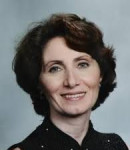
As an artist myself, I know how vulnerable it can be to share your voice. I also know that it is one of the most beautiful and gratifying ways to express yourself. With 15+ years of experience performing, recording, arranging and coaching vocals, I'm very confident I can help you reach your singing goals! I graduated from Berklee College of Music with a Major in Songwriting and as a Vocal Principle. Read More
Instruments: Piano Violin
As a teacher I am patient and considerate. My first priority with beginner students is developing correct posture and relaxed position of hands. This is of most importance since it is difficult to change posture later on and bad posture can affect not only the quality of musical performance, but the health of the student as well. I teach reading music from the very start; thus, as soon as a child can read the letters and numbers, he or she is ready to start reading music too. Read More
Instruments: Guitar
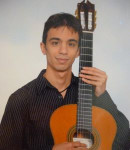
For beginning students, I typically start with some exercises for the left hand and right hand, easy arpegios, scales, melodies and chords. Once the student progresses to have a grasp of the fundamentals, I begin to introduce solo repertoire appropriate for their first recital performance. For advanced students, I start with intermediate and advanced studies and pieces like 12 Studies of Fernando Sor, studies of Leo Brower, 12 studies of Villa Lobos or some famous spanish reprertoire for guitar such as Rodrigo, Turina, and Torroba. Read More
Instruments: Violin Viola
Born and raised in Southern California, I began playing the violin at the age of nine and I have not looked back ever since! Currently, I have 16 years of playing experience and 7 years of teaching experience. Teaching private students have been such an unexpected joy of my music career. To see a student progress while enjoying their music journey is a teachers main task. More importantly, establishing a solid practice schedule is pivot in developing ones musical ability. Read More
Instruments: Guitar Bass Guitar Ukulele Electric Guitar Classical Guitar Acoustic Guitar
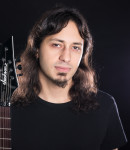
I love seeing my students become as passionate about music as I am! Therefore, it's important that each student progresses at his or her own pace. I encourage this by setting realistic goals for my students at each lesson. It's important for each student to have just the right amount of material to work on each week, so that they are progressing without feeling overwhelmed. I also make sure to acknowledge the work that might students put in, and encourage them to feel proud of what they accomplish. Read More
Instruments: Bass Guitar
What is your dream piece to perform and why?
I already performed it- Portrait of Tracy, a solo piece by Jaco Pastorius. I was asked to perform it at the Berklee Performance Center in Boston for the 1993 Bass Day performances. An amazing experience to perform it for over 3000 people.
If you have a Music Degree, what is it in (Performance, Education, Musicology, Theory, Composition, etc) and why did you choose that degree?
I have a performance degree from the Berklee College of Music. I chose performance because there was so much playing involved and the constant interaction with other musicians was immensely necessary in evolving to the level I sought after.
Do you use specific teaching methods or books? (Ex: Alfred, Bastion, Suzuki, Hal Leonard) Why did you choose them if you did?
Yes, I use a lot of the Berklee music books i have at my fingertips, Also I use the Jerry Bergonzi Inside Improvisation series which is so rich in content that you are amazed every time you work out of it then put it into place on the bandstand.
What do you think is the hardest thing to master on your instrument?
The hardest thing to master is to be able to play exactly what your hearing. That takes hours of performing, transcribing, and working hard where you're able to play exactly what you're hearing.
What musical accomplishments are you most proud of?
Soon to be released is a recording I did with some great LA and NY musicians and we were able to accomplish musically exactly what we wanted. Also, at Berklee I was able to play a lot with Antonio Sanchez, who is Pat Matheny's drummer. Also playing with Mahesh Balisoorio, an amazing pianist who has played with some of the best in Jazz. Also I got the chance to play with Danny Carrey- Tool's drummer.
Have any of your students won awards or been selected for special honors? How have they succeeded?
I've had two students graduate from Berklee College of Music and go on to professional music careers. Also students who, graduated Cal Arts, Oberlin Conservatory, and North Texas State- of the best music colleges in the world. .
Why did you choose your primary instrument?
I first started going around the house playing a rubber band and singing bass lines, then I had a friend who was a bass player and he lent me an instrument and just love the sound of the bass...
Did you have a teacher that inspired you to go into music? How did they inspire you?
My dad inspired me to go into music because he was a musician and started me out on the baritone horn, I then changed to trumpet in the 5th grade and my band teacher Mr. Baxter had multitudes of inspiration for me to continue my musical journey.
What advice do you have about practicing effectively?
Repetition is key to forming the musical chops, muscle memory, and complete understanding of the use of concepts and approaches. Also, concentrated and aware practice keeps you sharp and up on ideas, and improv.
How do I know if my child is ready to start lessons?
One way to tell is if they are singing, banging out rhythms on anything available to them. Also, if they start to ask questions about how to do things musical I think that is a good indication they are ready for lessons.
When will I start to see results?
Some results you will start to see right away, others may take a week or so, and advance techniques may take months at a time. The results are sometimes difficult to see yourself, that's where the teacher's experience comes in.
25 Years
Since We Started
41,456+
Happy Customers
10,769
Cities with Students
3,123
Teachers in Network
Trusted as the industry leader, for over 21 years the teachers in our network have been providing Music lessons in Los Angeles to students of all ages and abilities.
We'll then reach out to the teachers for you.
Schedule the risk-free trial lesson directly with the teacher.
Continue with that teacher or try someone else.