
 212-625-1520






Musika Quick Stats
25 Years
Since We Started
41,456+
Happy Customers
10,769
Cities with Students
3,123
Teachers in Network
Lesson Special - Up to 20% OFF! Get Started Now with a Risk-Free Trial!
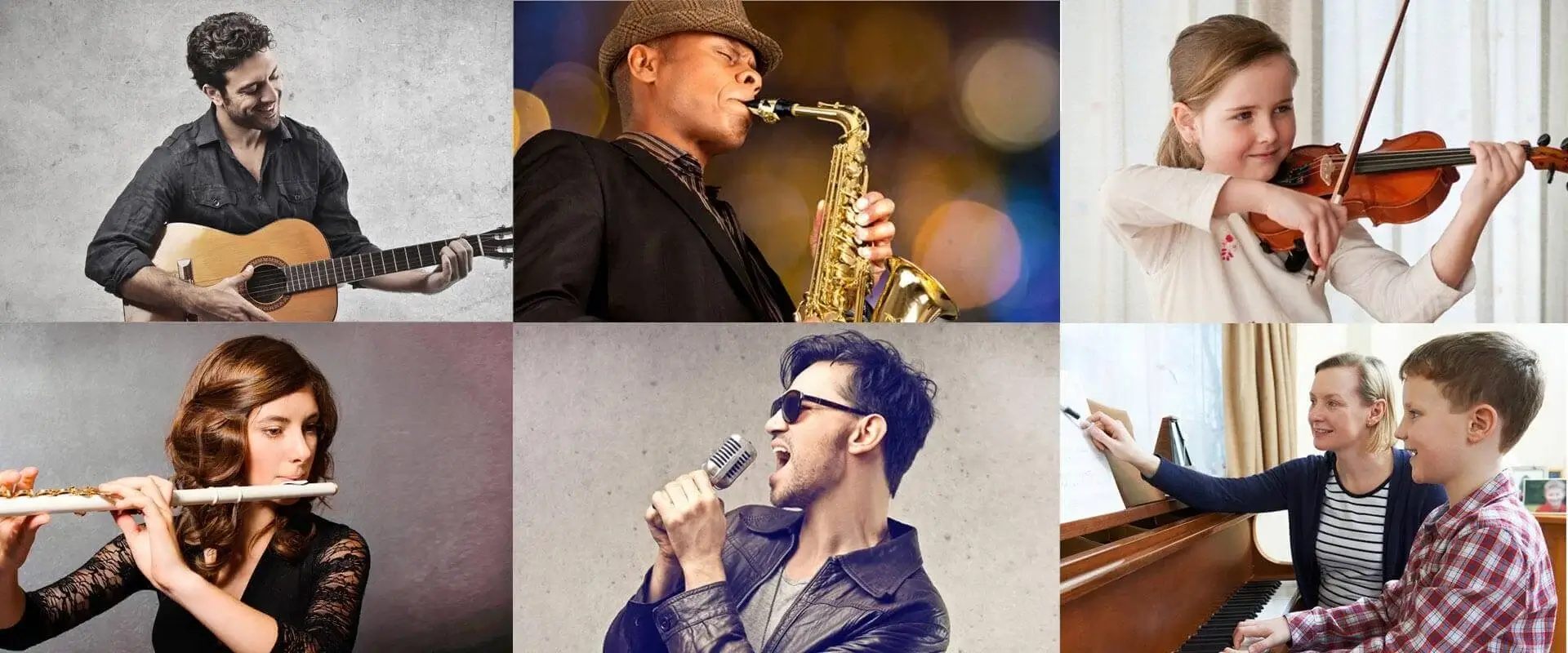
Here are just a few of the many teachers offering Music lessons in NYC, New York . Whether you are looking for beginner guitar lessons for your kids, or are an adult wanting to improve your skills, the instructors in our network are ready to help you now!
Instruments: Violin
I am a trained, experienced violin teacher with a passion for classical, baroque and chamber music. I have a BA and MA degrees in Education and am licensed by State of New Jersey Department of Education. I teach from beginning to advanced level students, ages 7 to adults. I completed private advanced Violin studies with Emily Gregerson; Elliot Golub at University of Chicago, Jules Samuel Applebaum, Maria Radicheva of Manhattan School of Music; and Vita Wallace. at Chamber Music Society of Lincoln Mannes College of Music. Read More
Instruments: Piano Guitar Cello Bass Guitar Recorder Double Bass Keyboard
I have seen how music education helps my students become great thinkers, community leaders and artists themselves. As a teacher, I strive to engage students by nurturing their passion and curiosity for the arts and learning as a whole. It is my goal to help my students take what they learn through music and apply those skills to other areas in their lives, much as many of my mentors have done with me. Read More
Instruments: Piano Drums Bass Guitar Latin Percussion Keyboard
One of the greatest sources of joy and exhilaration I have experienced throughout my teaching career occurs every time one of my students performs, and I get to witness the hard work and determination they have implanted into their playing. Every time they smile while playing their instrument is the single most rewarding feeling I have encountered in my years as a teacher, and I relish the opportunity to bask in that feeling every chance I get. Read More
Instruments: Drums
I've been playing and studying music since I was pretty young. I've been in several music schools and received education by multiple music teachers and artist since 2000. In 2016 I graduate from The Collective School of Music in NYC with a Diploma in Music and Professional Drummer Performer. Having multiple influences and had studied with different teachers allows me to teach students of all ages and levels. I am really serious about my job and I expect the same effort and dedication from each student. Read More
Instruments: Violin Electric Violin Fiddle
I tailor my lesson plans specifically towards what each student wants and needs. Typically with very young children I will start with larger scale motions as it is difficult for them to place their tiny fingers on the instrument and coordinate. At that point my emphasis is on them having fun and avoiding any bad habits. I generally go through the motions with them so that they feel more confident. Read More
Instruments: Clarinet
My teaching style allows room for students to explore their own individual interests while remaining within a framework of achievable and incremental goals. One of the amazing things about music instruction is it allows people (especially younger students) to learn the process of incremental goal setting and achievement for long term success. I like to work with my students to develop a set of goals and a game plan for how they can achieve what might seem far off to them. Read More
Instruments: Drums
As I said before, I like to teach as I was taught and add things I've learned along the way. Learning any instrument, I was told, is like building a house; you need to lay a strong foundation upon which to add walls, doors, windows, and decor (styles, techniques, feels, and your own personal strokes unique to each individual....there's no roof because you can never finish learning!). Drums especially focus on the base, because of their role in any musical group. Read More
Instruments: Guitar Trumpet Drums Bass Guitar Electric Guitar Acoustic Guitar
What do you think is the hardest thing to master on your instrument?
Discipline and consistency. There's always something more to learn and finding ways to show up for our instrument as consistently as possible is maybe the most valuable lesson that learning an instrument can teach. It takes time and there's no shortcuts. It's just being able to stay committed to the process of learning and getting better little by little that pays off in dividends.
When did you decide to become a professional musician? Was it a gradual decision or was there a defining moment for you?
Becoming a professional musician was always a dream of mine. Throughout my early adult years I was solidly a semi-professional, having other jobs as well as doing music. Since 2022 I've gone full time and I've never looked back. It's a real privilege to be able to do this professionally and I don't take it lightly.
Does music run in your family? Tell us a little about your musical family members.
We've got a family band! There's not a Sherman family occasion that goes by without us playing a set or two. My cousins play and my brother also plays a bunch of instruments, so its always a joy to get together. We'll play anything from classic rock from the 60's & 70's, Motown, current top 40 and everything in between.
If you play more than one instrument, how did you decide to start playing the second? (Or 3rd, 4th, 5th, etc)!
My family is also musical. My older brother was the drummer in a band when he was in high school and his band would practice at our house. Because of that, there were always tons of instruments around. My curiosity led me first to the bass that hung out on our couch, and then as I got older and was able to see some amazing musicians perform, I felt like I had to figure out how to play like them. That impulse led me to learn drums and then guitar in college. Once I got a basic proficiency on those, it became more a method of self-knowledge. Music always felt like a safe place to go, with the added benefit that at the end of the day you can take all the things you learned and get on stage and perform!
How do I know if my child is ready to start lessons?
At first, we're looking for a spark. It could be wonder or amazement while watching or listening to music, it could be the ability to focus on something musical for an extended period of time. It could be your child asking you every day if you can get them that guitar. At that point, it's worth a try. Lessons may not be the best fit for every child, but if your child is expressing interest in music it's a great place to start.
When will I start to see results?
This will depend on me, you, and your child (if you're booking lessons for your child) all doing our respective jobs. My job is to set out clear exercises and goals and make practicing exciting and fun. Your child's (or you, if you're looking for lessons for yourself) job is to find a way to be consistent in their practice. A little every day is better than a lot every now and then. If you're a parent, your job is to encourage your child's budding relationship with their instrument, and with music in general. Reminding them to practice, renting an instrument, and buying into their musical journey can go miles and miles for a child's musical development.
What musical accomplishments are you most proud of?
Playing at Red Rocks Amphitheatre in Colorado was a huge bucket list moment. I had the opportunity to perform there in July 2024 with by band Snacktime, along with our big siblings Portugal The Man.
Being the house band for Jason Kelce's late night talk show "They Call it Late Night" on ESPN was also really cool.
I've also really enjoyed recording music and producing it all myself and watching it all come together piece by piece. It's something I would wish for any student of music, especially nowadays when it's so easy to start to begin to record yourself.
What advice do you have about practicing effectively?
I love this question. It reminds me of a quote attributed to Abe Lincoln: "Give me six hours to chop down a tree and I will spend the first four sharpening my axe". In other words, it's important to be clear with ourselves what our goals of a given session of practice will be. Are we working on flexibility? Are we working on intonation? Are we working on a specific piece of music? With that in mind, I've found it's well worth the time to spend even a couple minutes thinking and planning out how we want to use the time practicing, which would then dictate what exercises we might practice, or how much time we want to spend on specific aspects of our instrument.
25 Years
Since We Started
41,456+
Happy Customers
10,769
Cities with Students
3,123
Teachers in Network
Trusted as the industry leader, for over 21 years the teachers in our network have been providing Music lessons in NYC, New York to students of all ages and abilities.
We'll then reach out to the teachers for you.
Schedule the risk-free trial lesson directly with the teacher.
Continue with that teacher or try someone else.