
 303-569-4586






Musika Quick Stats
25 Years
Since We Started
41,456+
Happy Customers
10,769
Cities with Students
3,123
Teachers in Network
Lesson Special - Up to 20% OFF! Get Started Now with a Risk-Free Trial!
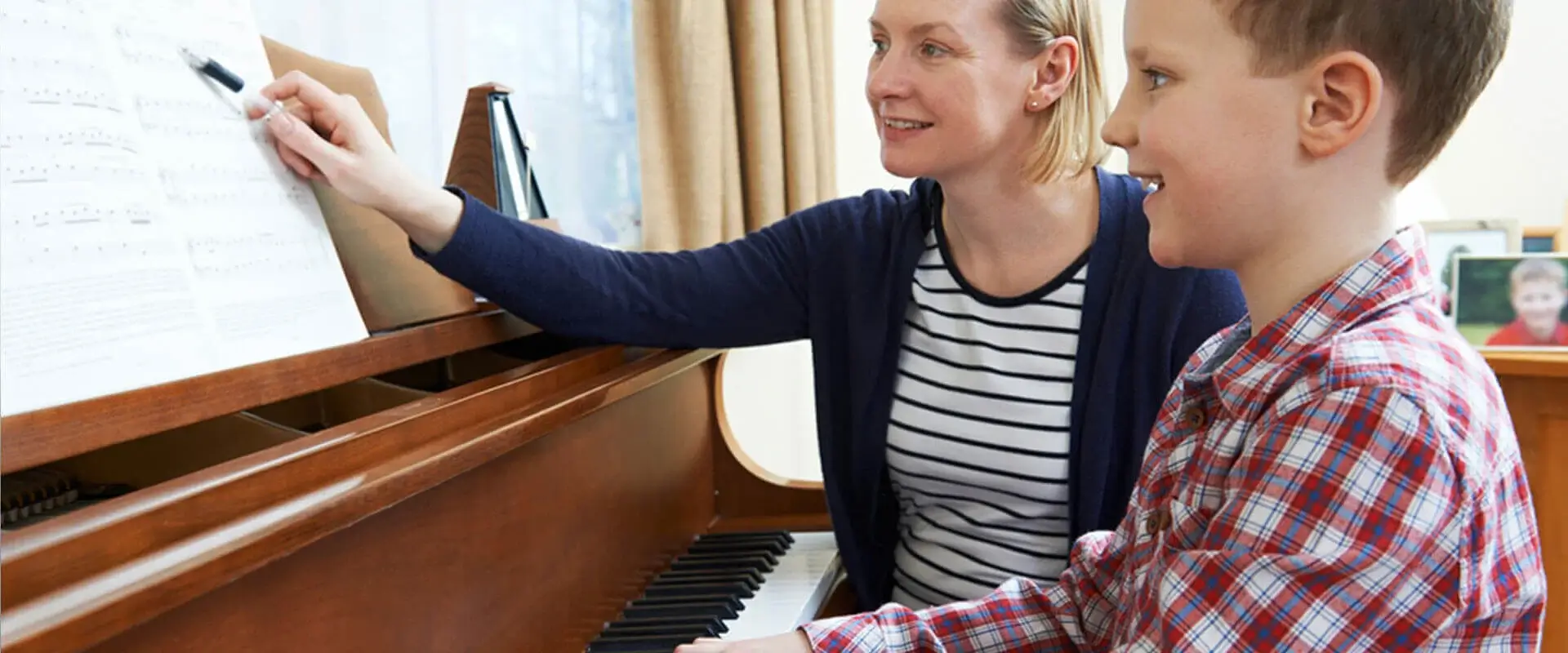
Here are just a few of the many teachers offering Piano lessons in Westminster . Whether you are looking for beginner guitar lessons for your kids, or are an adult wanting to improve your skills, the instructors in our network are ready to help you now!
Instruments: Piano Guitar Synthesizer Keyboard Electric Guitar Classical Guitar Acoustic Guitar
I love the many facets of music. My love of music, and my best practice, stems from a deep enjoyment of listening to music, as a consumer of sound. Developing my listening ear has been the most useful tool in all my years as a performer. I've played with academic ensembles in a choral setting, and done significant work in small ensemble classical guitar groupings. My most enjoyable long term academic ensemble, however, was the African Hand Percussion Ensemble, as while it had a very strict underlying structure for the cohesion of the group, it was deeply improvisational in nature, my favorite aspect of musical performance. Read More
Instruments: Piano
For young beginners I start with a wonderful method book called "Progressive Piano method for young beginners". It begins with note reading which I feel is one of the most important parts of beginner piano playing. The book includes a play-along cd that I use for rhythm practice during lessons to clap and count, because having a steady rhythm is the second most important aspect of playing the piano. Lessons include a mixture of reading and playing music from the book, clapping and counting, flashcards, and musical games. Read More
Instruments: Piano Guitar Fiddle Electric Guitar Acoustic Guitar
I want you to enjoy the guitar more than anything. Every student progresses at there own pace. It's important to set realistic goals for each student and in getting to know a students ability, taste, and drive we can get where you want to be on the guitar. Acknowledging accomplishments fuels a students desire to progress, and makes students more eager to learn. By finding out what inspires the student, I can tailor our lessons to their wants and needs. Read More
Instruments: Piano Keyboard
I was my own first student. I began teaching myself how to play the piano over 10 years ago. Throughout this process I learned how to approach some typically confusing topics in much more digestible ways. A benefit to starting out as a self taught musician is that I had to learn how to make sense of things myself rather than memorizing information that a teacher fed me. A main focus of mine as a teacher is encouraging regular practice routines where the student can solidify the information we discuss in our lessons as well as uncover new questions they may have about the subject. Read More
Instruments: Piano Guitar Bass Guitar
I have been playing guitar for over half of my life and have 5 years of teaching experience. I studied guitar performance at CU Denver and have extensive formal training in music theory and stage performance. My lessons are tailored to fit your needs as a musician of any kind. I'm comfortable teaching just about any style you can think of; some of my strongest styles are metal, jazz, fusion, rock and pop. Read More
Instruments: Piano Voice
I have been teaching since 1980. I am originally from North Carolina and moved to Colorado in the 80s. I am a member of National Music Teachers Association, Colorado State Music Teachers Association and Foothills Music Teachers Association. I have taught both at the private and public school levels and teach students beginning at age 5 through adult level. I have sung with Charlotte Opera, Jacksonville Opera and the Lakewood Chorale as soprano soloist. Read More
Instruments: Piano
For beginning young students, I typically start with Music Tree or Piano Adventure. Once the student has progressed, I will begin to introduce solo repertoire. For adult students, after seeing their level of playing, I would find the style of music that they are interested in. If students are interested in learning specific music pieces, we can focus on that until feeling comfortable and confident then move on to similar style so we can keep that interest going then move on to more advanced pieces. Read More
Instruments: Piano Guitar Trumpet Trombone Organ Synthesizer Ukulele Recorder Euphonium Music Keyboard Acoustic Guitar
If you have a Music Degree, what is it in (Performance, Education, Musicology, Theory, Composition, etc) and why did you choose that degree?
My Masters Degree is in Music Education with a Piano emphasis. I was playing trombone in the large ensemble, but taking private studio lessons on piano. I chose music education as I was already 17 years into a thriving teaching career. Earning a masters degree in education would help provide me with more strategies to be effective in my teaching relationship with students. As long as you are majoring in a music study, performance is a big part of your program. I still perform quite frequently, with and without students. Sharing this passion through education allows the passion to spread and flourish.
What do you think is the hardest thing to master on your instrument?
That is a relative question, based on the level a student is playing. Beginners often struggle to get two hands to play independently of each other. It can also be a challenge to move into a triple time signature. More advanced students sometimes find it a challenge to bring musical expression into a technical piece with phrasing, dynamics and tempo. Playing at a consistent tempo and not rushing can be a challenge, especially in performance situations. The piano is a very expressive instrument, great for solo and accompanying. Putting it all together is exciting!
Do you use specific teaching methods or books? (Ex: Alfred, Bastion, Suzuki, Hal Leonard) Why did you choose them if you did?
Yes, I do use specific curriculums in the interest of making sure all the bases get covered. I have used most of the major ones through the years, but have primarily narrowed it down to a couple now, at least for the beginners and intermediates. Depending on progress and efficiency of learning, I will make a choice of which method I think may be beneficial to a particular student. More advanced students begin to choose a direction their musicianship is leading them, so curricular choices become more varied.
What does a normal practice session look like for you?
Students are given 3-4 books to work out of - Technique, Theory, Piano Literature (where everything is ties together into actual songs) and Performance.
Practice sessions should begin with some technical studies for warm-up of fingers and mind. These are very gradual in their approach to technique - fun little exercises suited appropriately for the level where a student is currently.
Upon completing the technique practice, move into the piano 9lesson) book. I would suggest playing the song through as far as you can comfortably go, making note of anything that needs work.
Then, go back and work your way through the problem spots slowly. Pick out just the tiniest part of that spot until you can play it well. Then add some context to it until it can be played well, three times in a row preferably.
This little fixit session should be applied each day until the song can be played all the way through with no mistakes.
25 Years
Since We Started
41,456+
Happy Customers
10,769
Cities with Students
3,123
Teachers in Network
Trusted as the industry leader, for over 21 years the teachers in our network have been providing Piano lessons in Westminster to students of all ages and abilities.
We'll then reach out to the teachers for you.
Schedule the risk-free trial lesson directly with the teacher.
Continue with that teacher or try someone else.